ECG Guru - Instructor Resources

A gathering place for instructors of ECG and cardiac topics.


Subscribe to me on YouTube

Wide Complex Tachycardia

Spontaneously Changing Conduction In Wide Complex Tachycardia

Thu, 04/11/2013 - 00:23 -- Dawn

This ECG was donated to the ECG Guru by Dr. Arnel Carmona, one of our favorite Gurus.  You will not often see such a great example of this.  We are very grateful to Dr. Carmona for his contribution to learning. Dr. Carmona's new blog is EZG - ECG for beginners and enthusiasts.    

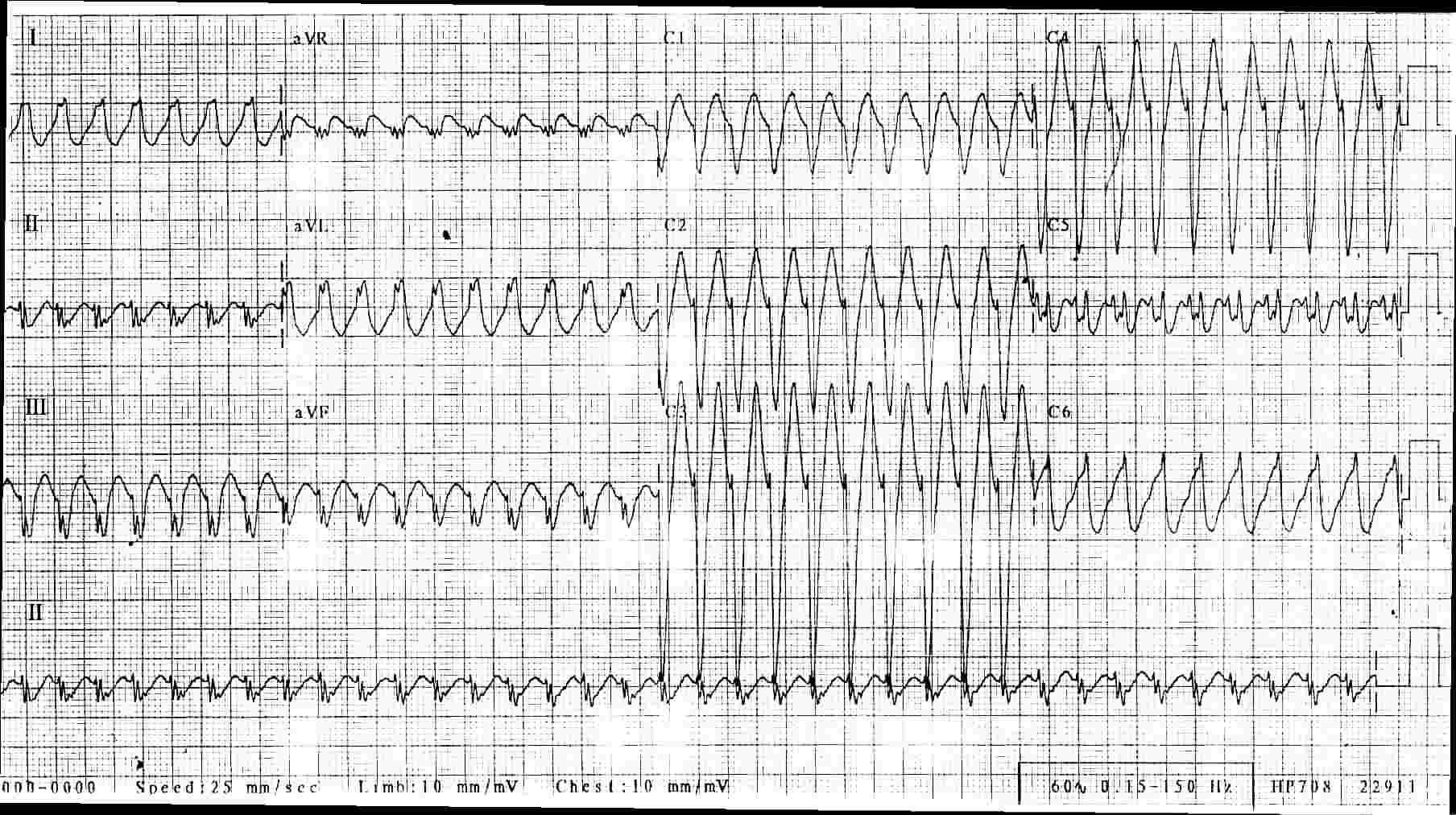
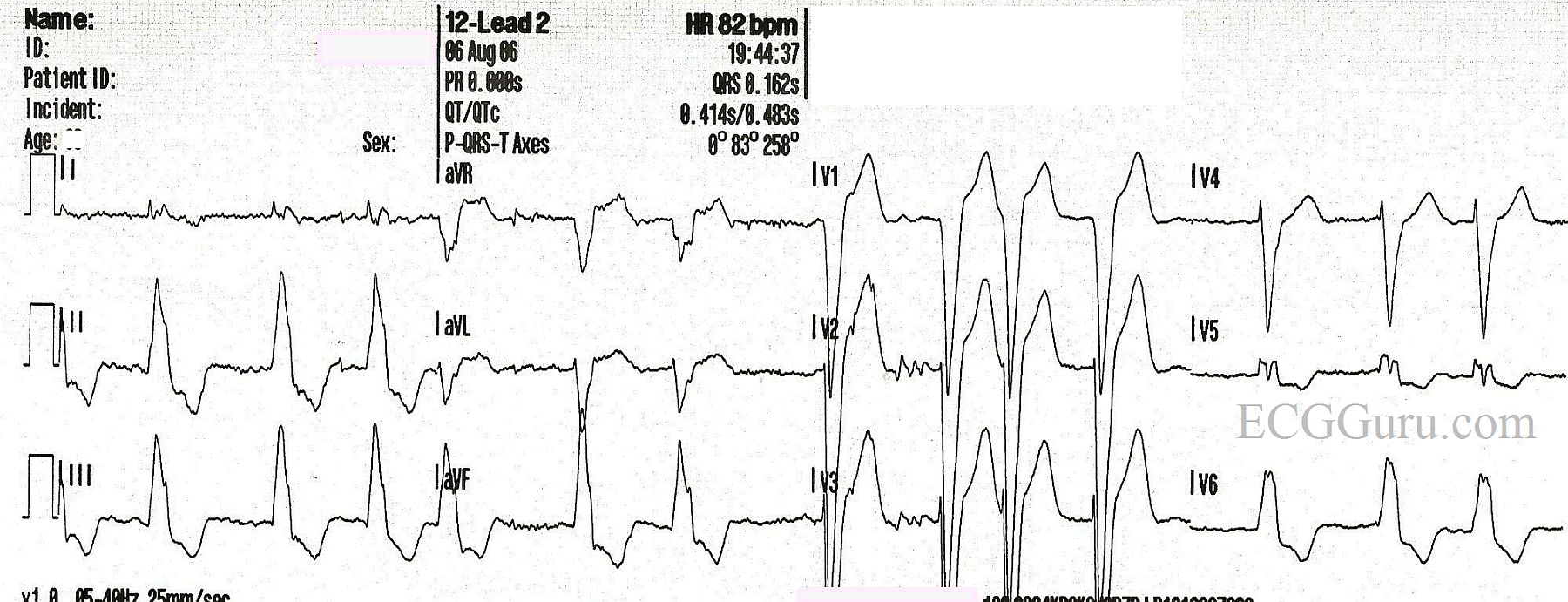
An adult patient was admitted due to palpitations.  What is this rhythm?This is a tachyarrhythmia that initially is regular wide complex (RBB morphology) and later became regular narrow complex at a rate of about 187 bpm. There is normalization of the QRS without a change in heart rate. In the latter part of the tracing (narrow complex), pseudo-r can be seen in V1. So, this is SVT with aberrancy with spontaneous normalization.

What is the cause of the intraventricular aberration during acceleration of heart rate? It could be due to failure of the refractory period to shorten or possible lengthening in response to acceleration. 

What is the cause of the normalization of the of the QRS? The normalization of intraventricular conduction could be due to the gradual shortening of bundle branch refractory period in response to the tachycardia. 

What is the possible mechanism maintaining the aberration? It is likely due to the transeptal concealed conduction blocking conduction in the contralateral bundle. With dissipation of transeptal conduction, the QRS complex normalizes. 

What happened to the case? Adenosine was given, terminating the arrhythmia.  

Ref: 

Fisch C. 1983. Aberration : Seventy-five years after Sir Thomas Lewis. BHJ 50:297-302 

Fisch C and Knoebel SB. 2000. Electrocardiography of Clinical Arrhythmia. New York. Futura Publishing Co


Wide Complex Tachycardia: V Tach

Sat, 06/02/2012 - 16:02 -- Dawn

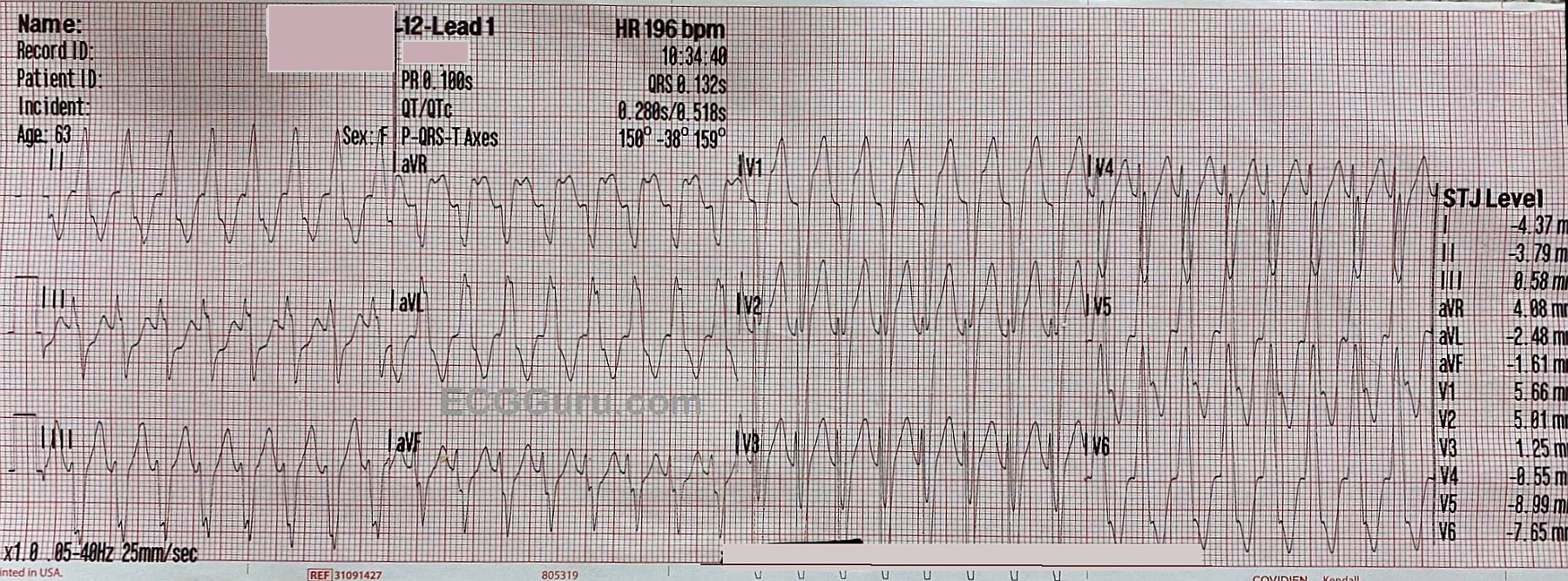
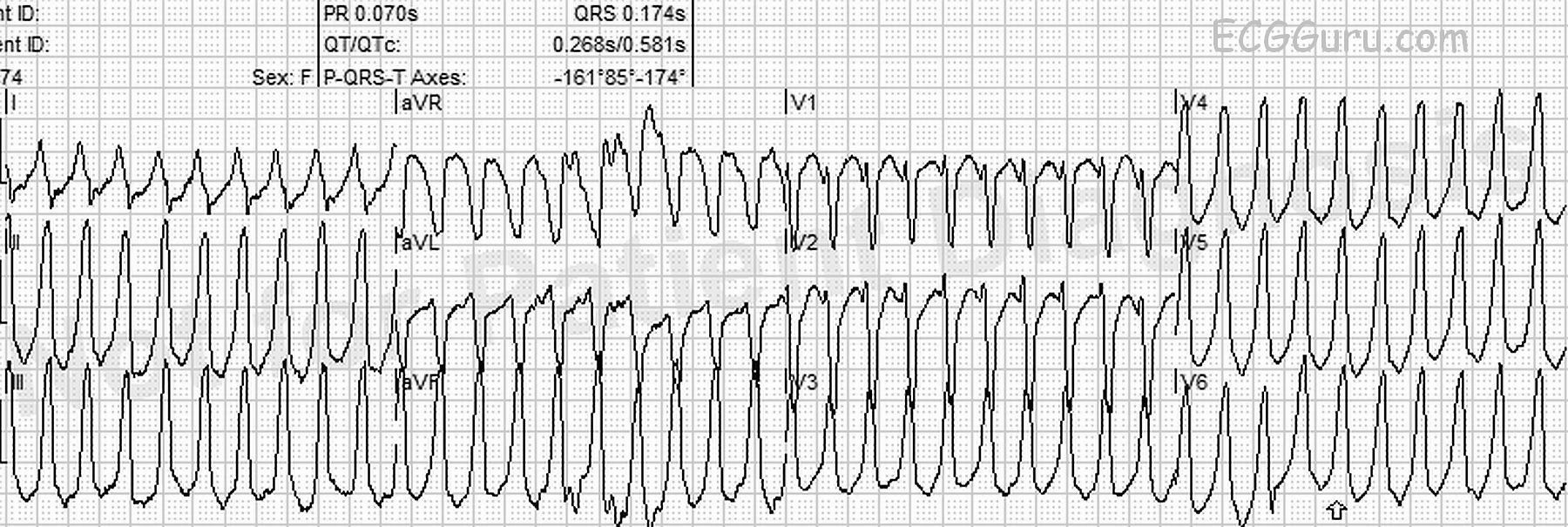
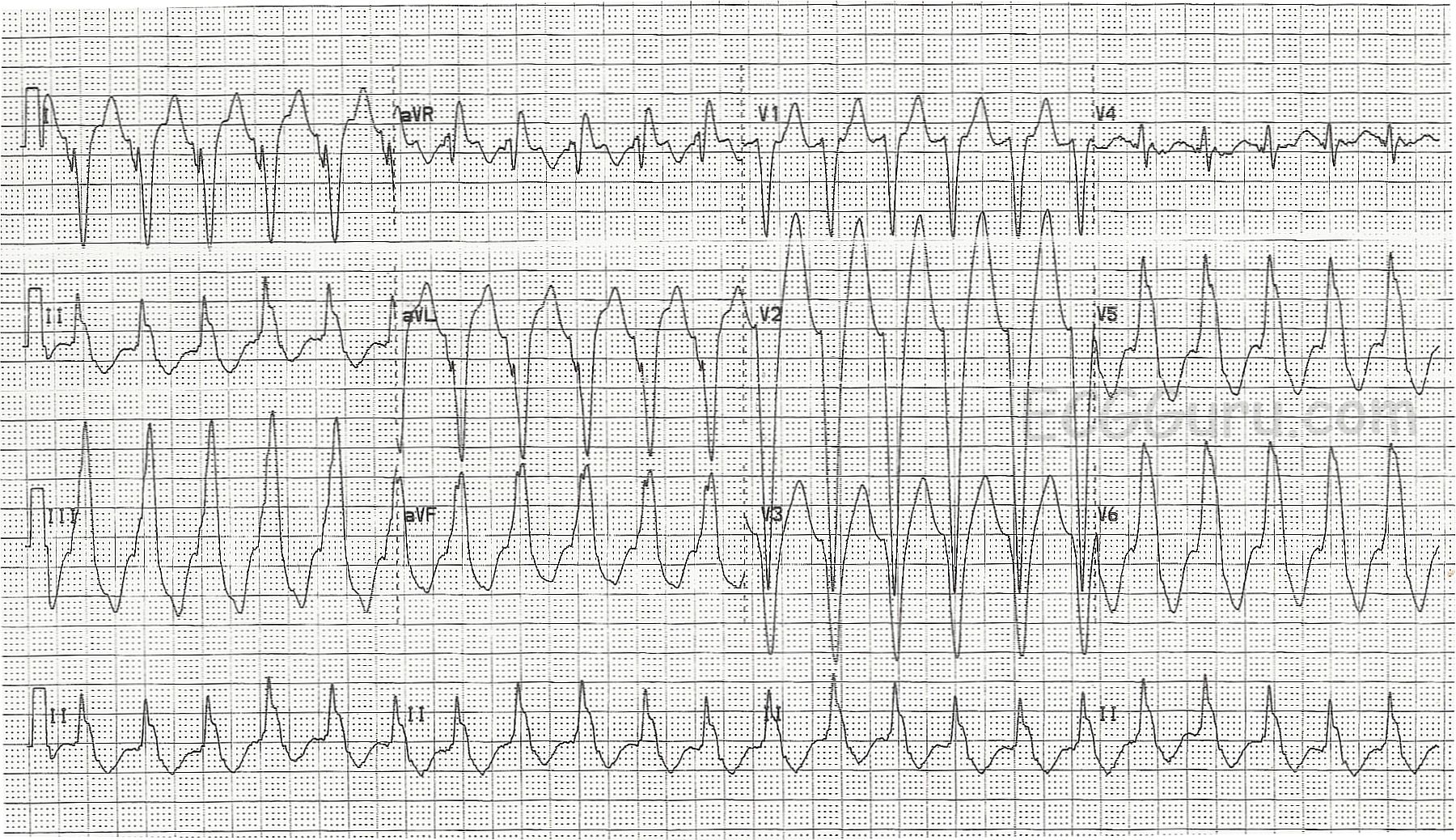
This wide complex tachycardia occurred in a 91 year old man with a history of atrial fibrillation. He complained of "fluttering" in his chest, and denied chest pain or other problems.  While the paramedic attempted to start an I.V., he spontaneously converted to atrial fibrillation with left BBB, and PVCs.  Once he converted, his symptoms abated.  Remember, all wide complex tachycardias (WCT) should be treated as V Tach in the field, as this is by far the most common WTC and the most dangerous.

Some of the ECG clues that this WTC is ventricular tachycardia are:

* Monophasic upright QRS in V1  (does not have RBBB pattern of rsR')

* Extreme left axis deviation (II, III, and aVF are negative, I, aVL, and aVR are poisitive)

* V6 is negative


For a more thorough discussion of the ECG signs of V Tach, go to Jason Roediger's Ask the Expert page discussion on the topic:

http://www.ekgguru.com/node/157

Wide Complex Tachycardia in a Patient with WPW

Mon, 03/12/2012 - 18:03 -- Dawn

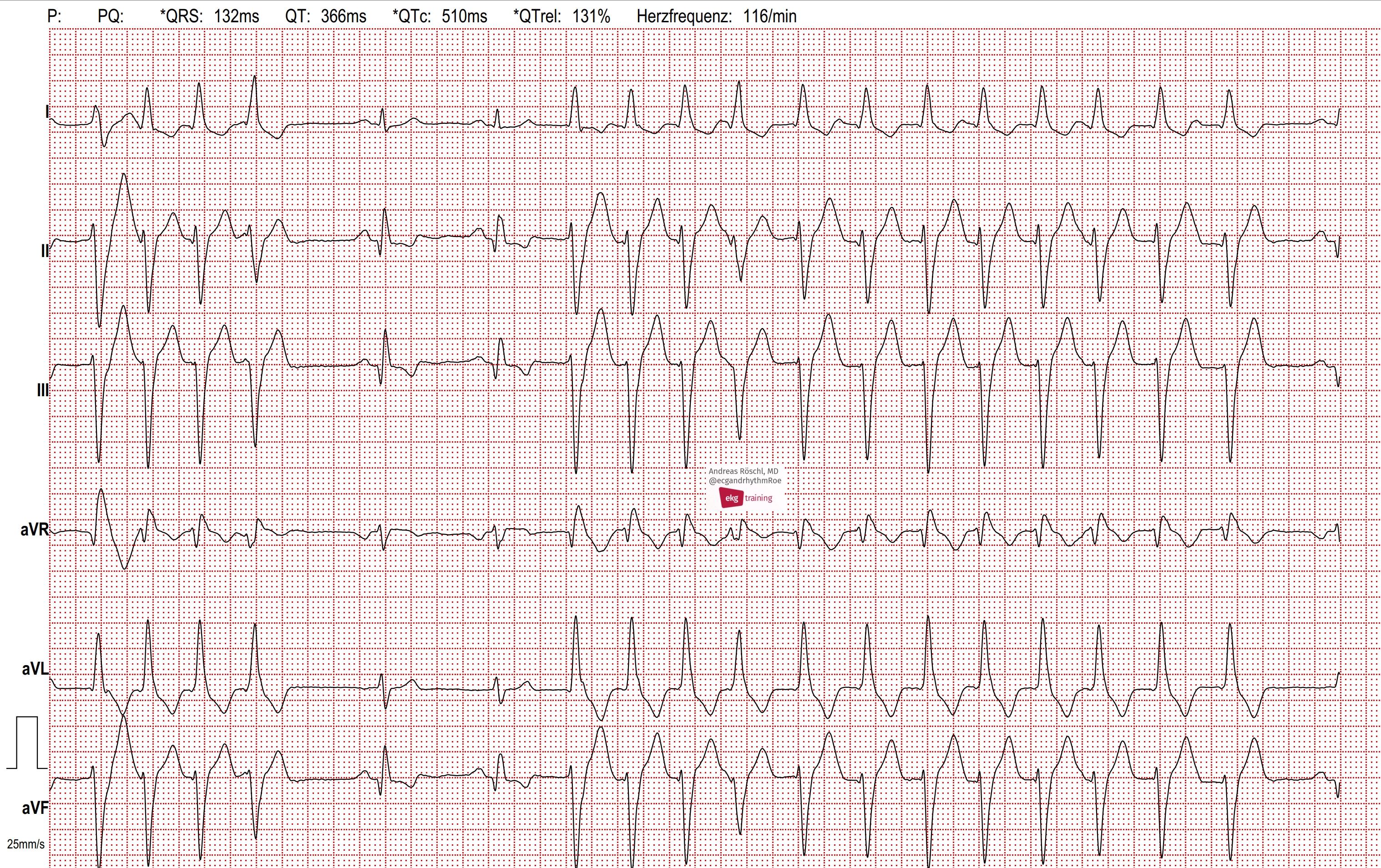
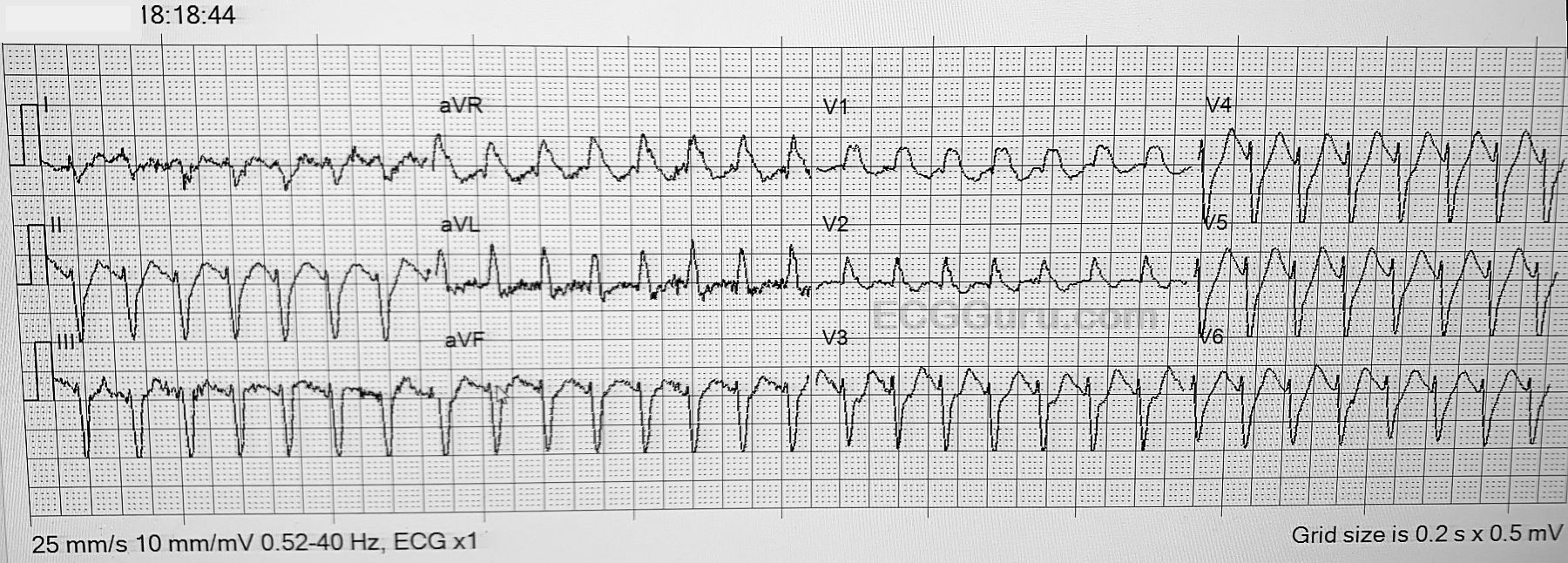
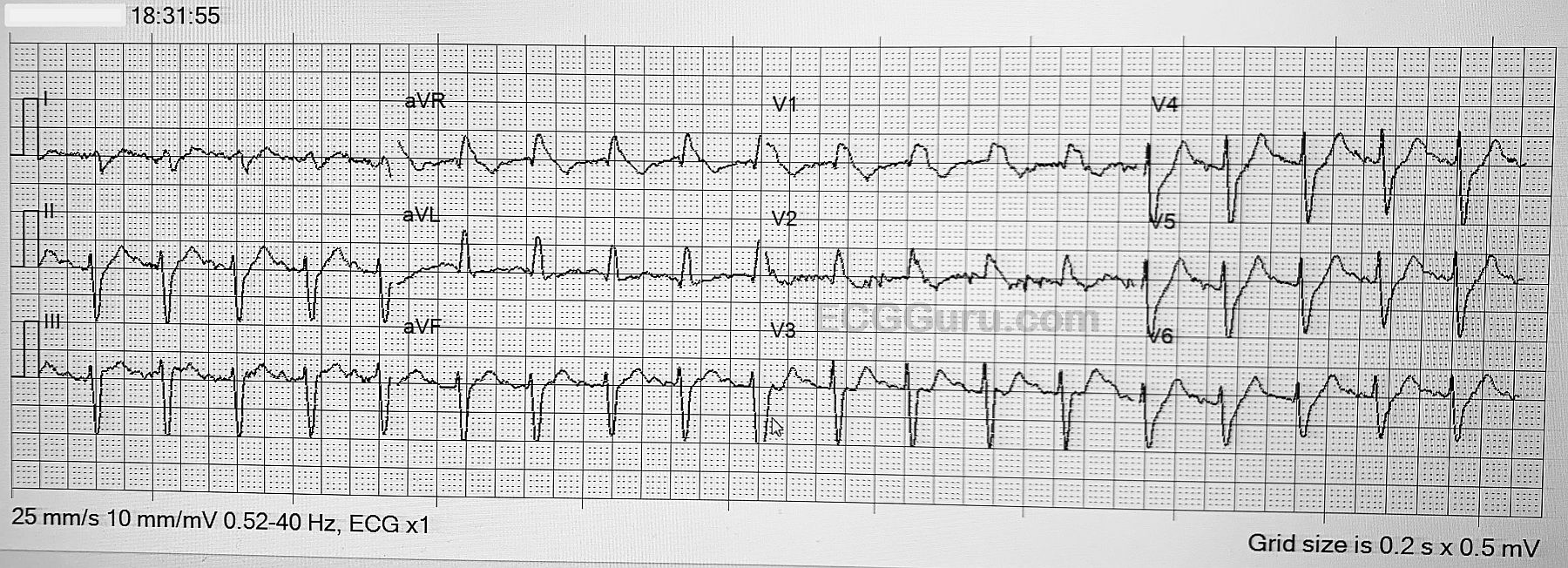
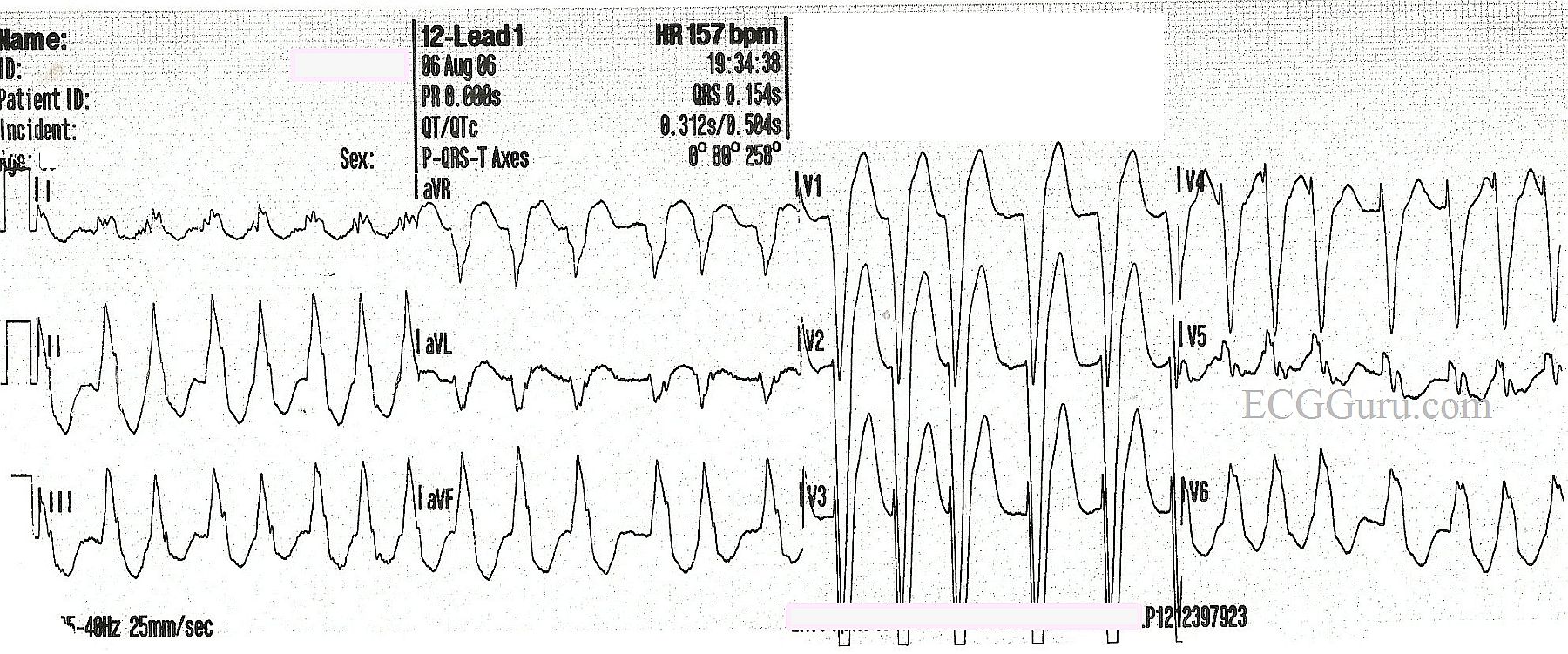
This ECG was submitted by Sebastian Garay, EMT-P and ECG Guru (and ECG Guru Member sebmedic). It is a very interesting case of wide complex tachycardia in a patient with Wolff-Parkinson-White.

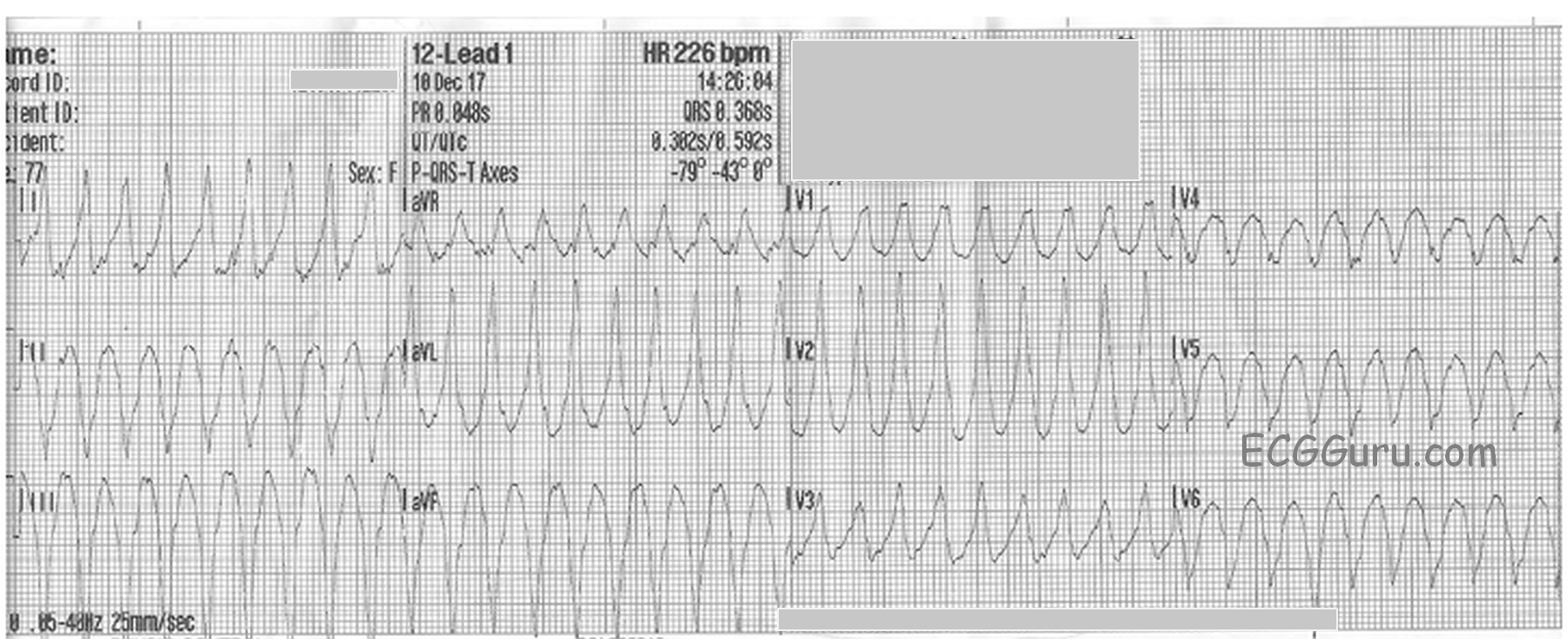
This is from a 57 year old man who sought medical help for a complaint of palpitations. He was known to have WPW. The paramedics determined that he was hemodynamically unstable, and in light of the wide-complex tachycardia, they performed a synchronized cardioversion at 100 j. The patient converted to the rhythm shown in the next ECG. The paramedics then administered a Lidocaine bolus and drip, considering this to be a ventricular tachycardia. The patient arrived in the Emergency Dept in improved hemodynamic condition.

This ECG can be used to teach V Tach for beginner students, WPW and WCT tachycardia differential diagnosis for more advanced students. It is also a good ECG for axis discussion, and for how lead placement affects the final product.

The differential diagnosis here is 1) V Tach and 2) SVT with aberrant conduction or left ventricular conduction delay. For a discussion of ECG criteria which help us diagnose WCT, see the "Ask The Expert" column from Jan. 11, 2012. Characteristics that make this look like V Tach include: wide complex and significant left axis deviation. Features which may favor a diagnosis of SVT are the pre-existing WPW and a rate of 222/min. There are no p waves seen. NOTE: V2 in this ECG appears to reflect electrode mis-placement, as it does not "make sense" in the normal progression of the QRS complexes in the precordial leads. It is clearly "out of place".


The second ECG shows the same patient after conversion of the tachycardia.  The delta waves of WPW are easily seen.

Wide Complex Tachycardia, 12 Lead ECG and Rhythm Strip

Wed, 11/30/2011 - 14:22 -- Dawn

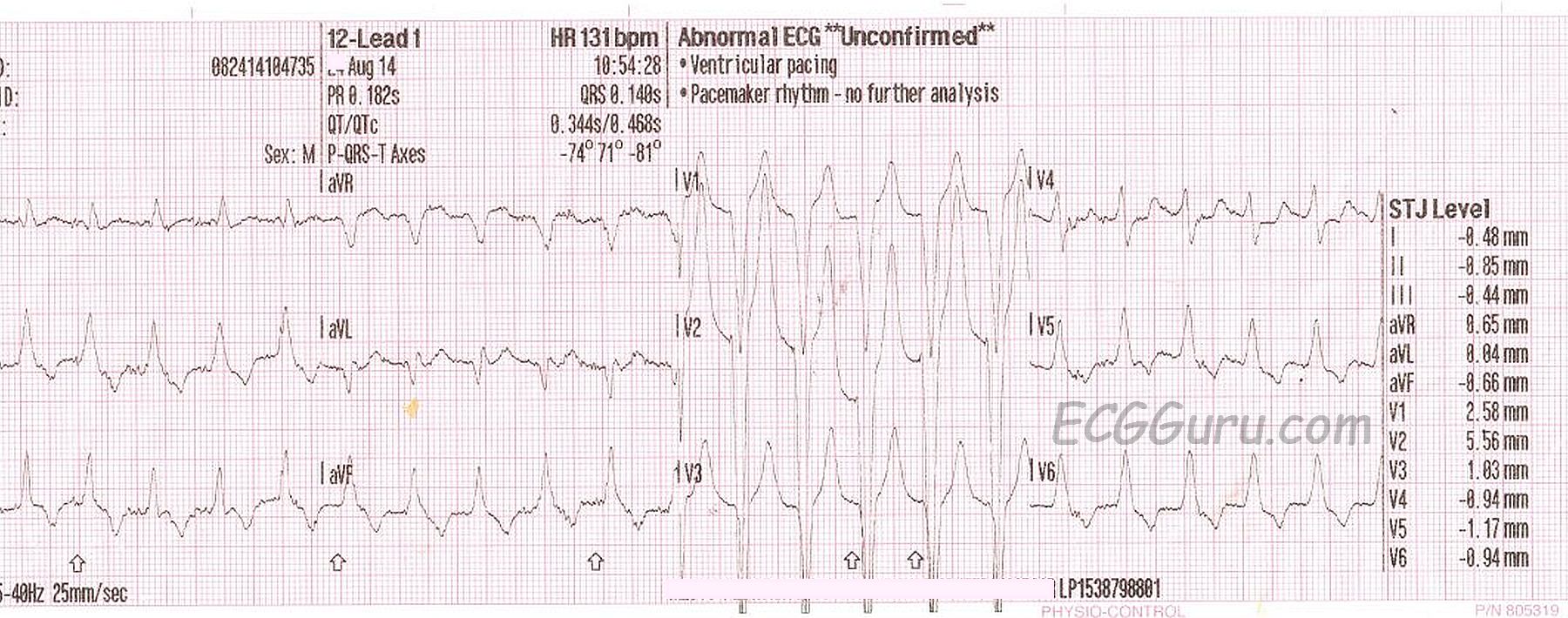
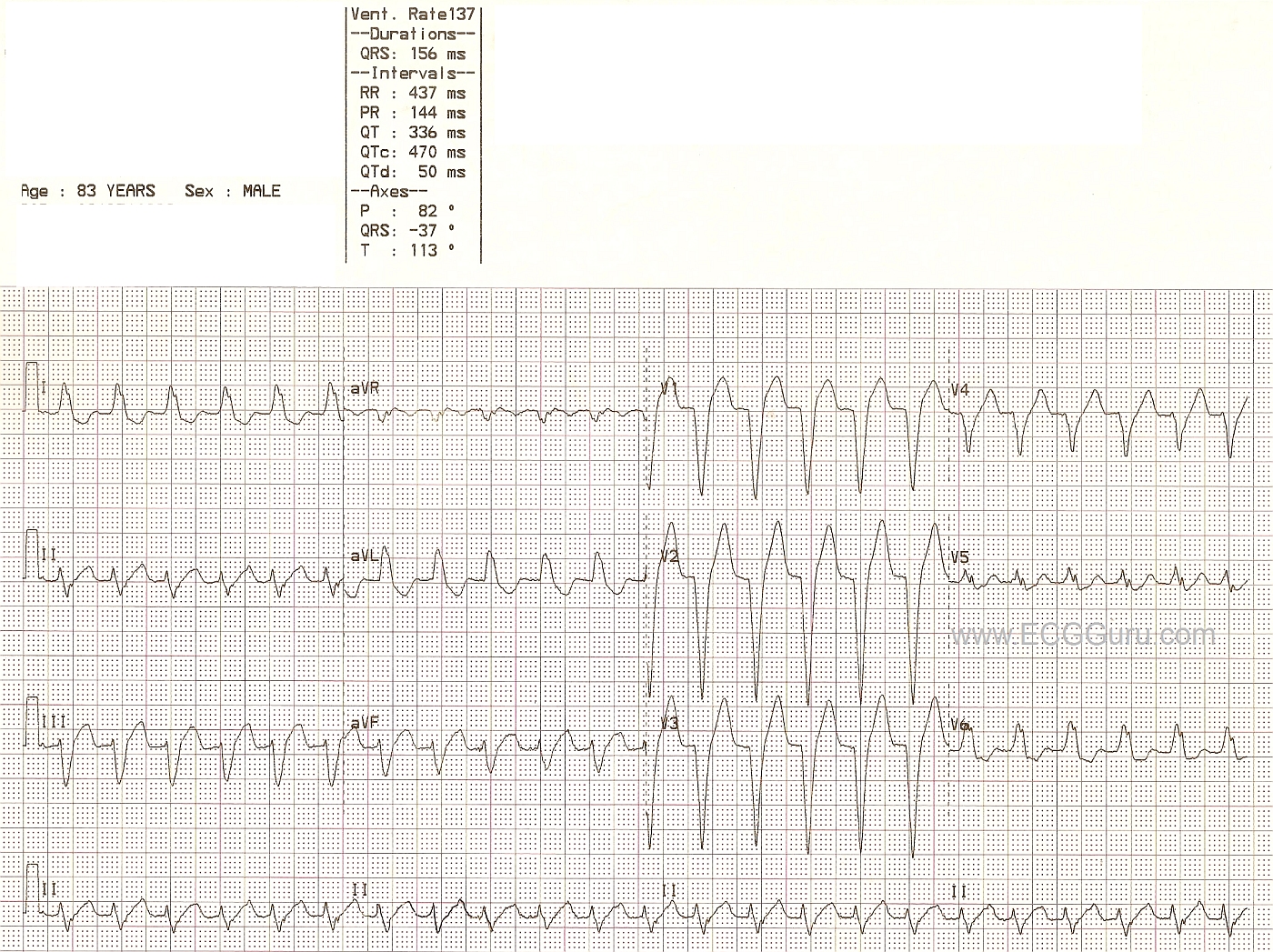
This is a good example of wide complex tachycardia that must be evaluated for V Tach vs supraventricular rhythm with left BBB.
The rhythm initially looks regular, but becomes irregular in V1 - V3. No P waves are seen prior to the QRSs, even when the rate slows down. The typical pattern for left bundle branch block exists: wide QRS, negative QRS in V1 and positive QRS in Lead I and V6. The irregularity suggests atrial fibrillation. A longer rhythm strip would be very helpful here. The axis, which is extreme left, could be from V Tach OR left BBB. There is no precordial concordance, favoring LBBB.
You may use this image free of charge to enhance your presentations or student handouts. Click on image, or, for best image quality, right click and SAVE image. For permission and charges for use in publications or for marketing uses, please contact the owner at ECGGuru@Comcast.net.

Wide Complex Tachycardia: Left Bundle Branch Block With Subsequent Rhythm Strip

Wed, 11/30/2011 - 13:55 -- Dawn

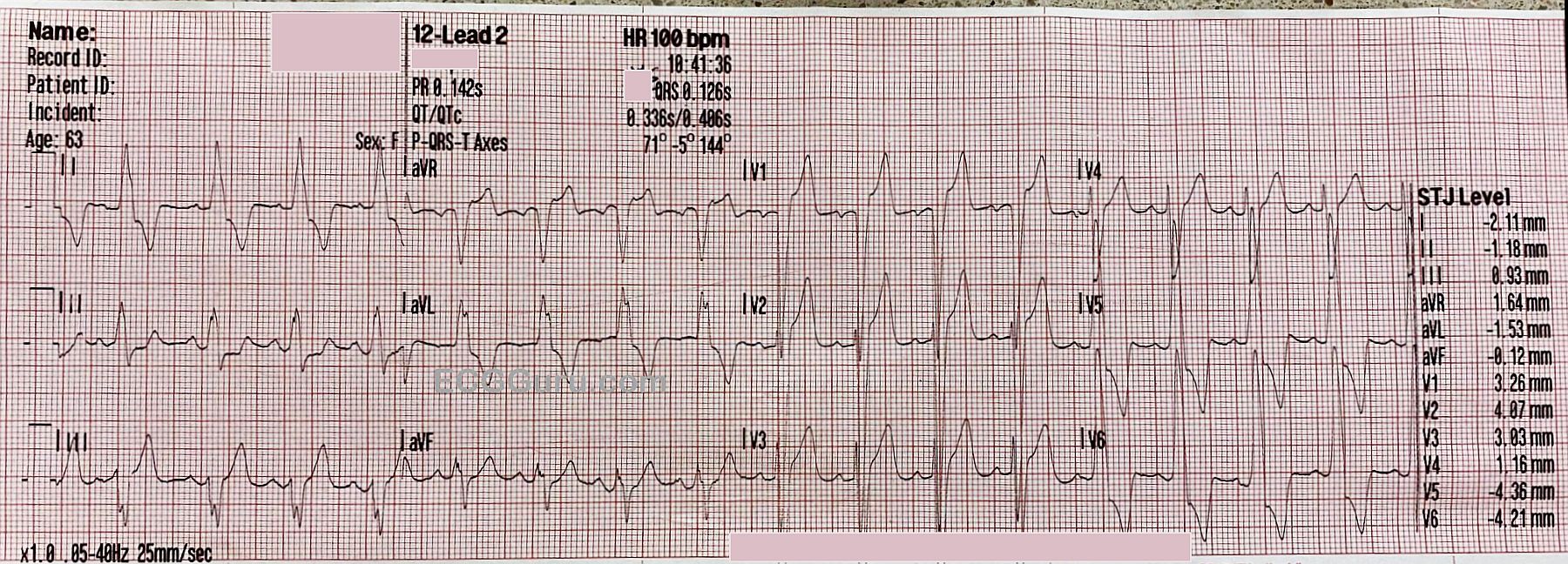
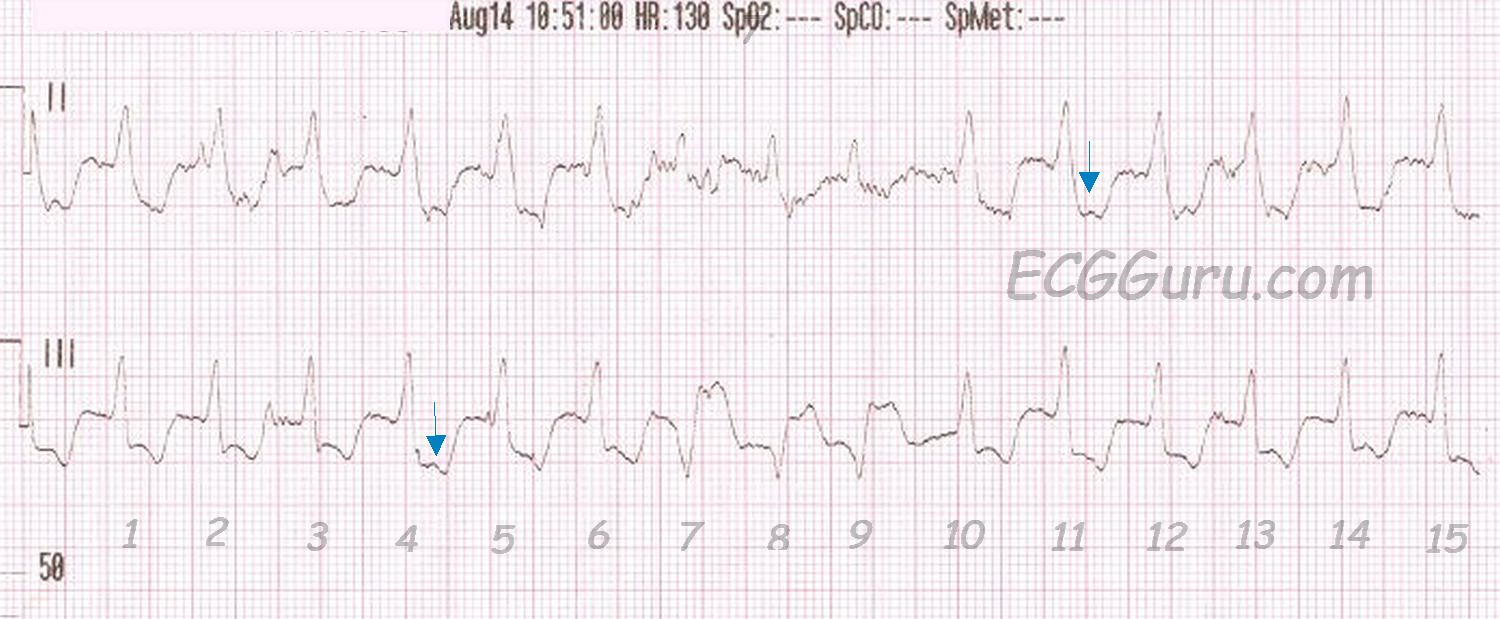
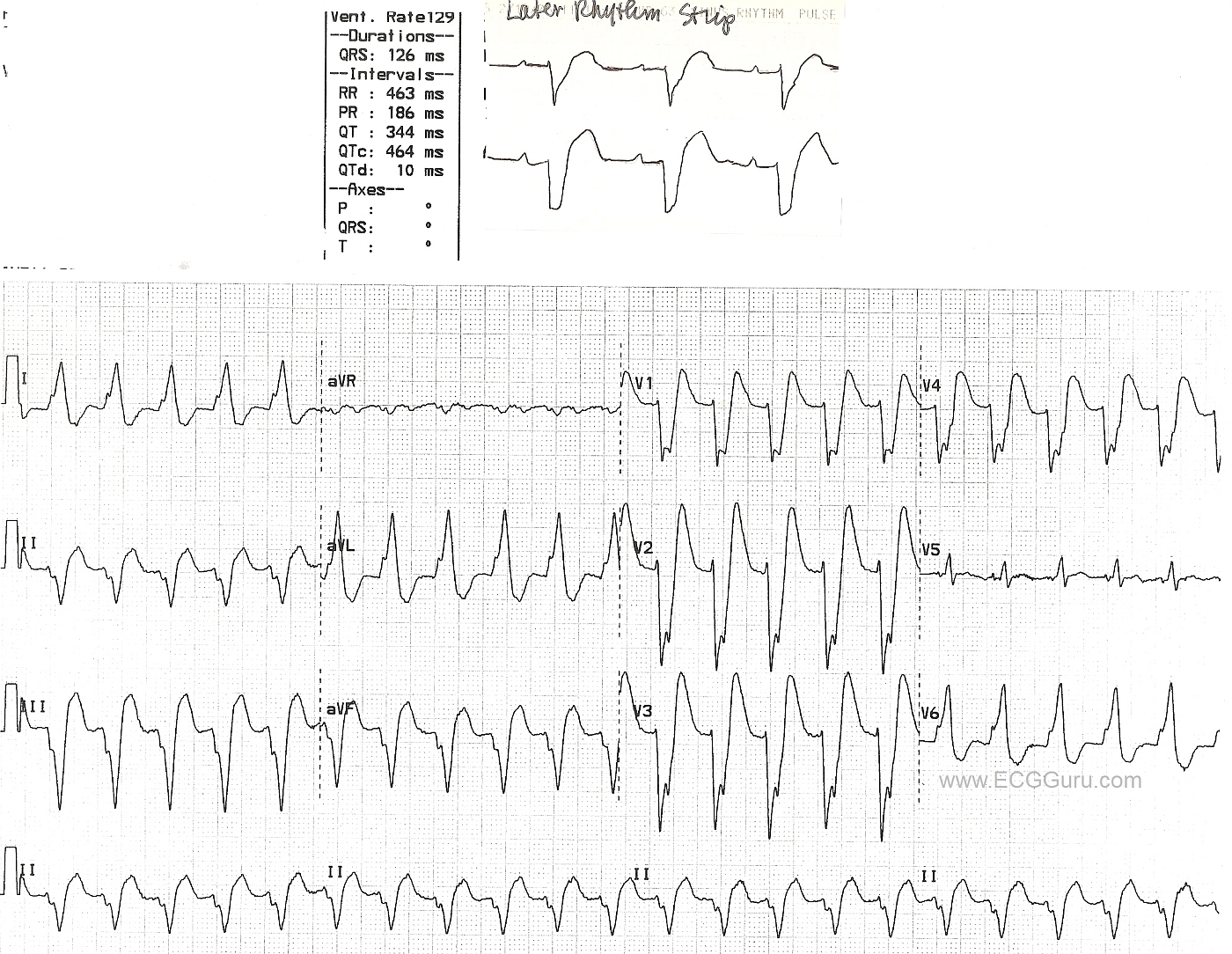
 This wide complex tachycardia has an initial rate of 129/min. It is difficult to discern if P waves are present, although the ECG machine does give us a PR interval. The ECG meets most of the criteria for left bundle branch block: wide QRS, negative QRS in V1, positive QRS in Lead I and V6. However, it is difficult to say for certain that this is a supraventricular rhythm. Later, however, the patient's rate slowed (see top strip), revealing P waves. When the rate slowed, the left bundle branch block pattern remained. That helps confirm the original interpretation of left bundle branch block. Interestingly, the BBB is not rate-related, in that it is still present at the slower rate.
You may use this image free of charge to enhance your presentations or student handouts. Click on image, or, for best image quality, right click and SAVE image. For permission and charges for use in publications or for marketing uses, please contact the owner at ECGGuru@Comcast.net.
This work is licensed under a Creative Commons Attribution-NonCommercial 3.0 Unported License.
 

Subscribe to RSS - Wide Complex Tachycardia