ECG Guru - Instructor Resources

A gathering place for instructors of ECG and cardiac topics.


Subscribe to me on YouTube

Sinus tachycardia

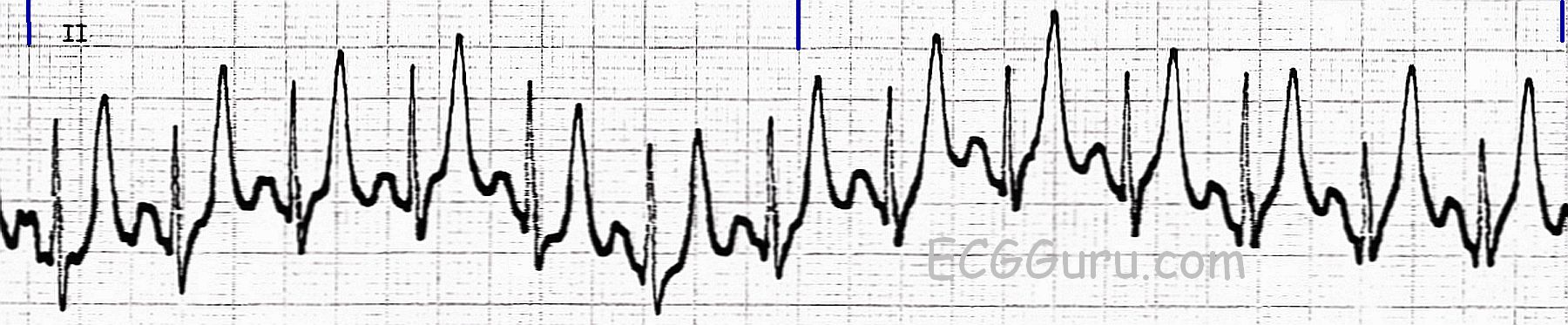
ECG BASICS: Sinus Tachycardia in a Toddler

Wed, 05/01/2013 - 19:24 -- Dawn

Here is a nice example of sinus tachycardia taken from a 2-year-old in the post-anesthesia care unit after a short GI endoscopic procedure.  Would you call this NSR, since it is from a child?  The pre-op heart rate in this child was 120/min.

For your more advanced students, remind them that, in adults especially, a heart rate close to 150/min. should cause them to examine the ECG in several leads, looking for the presence of atrial flutter with 2:1 conduction.  Another important teaching point, most ADULTS with sinus tach at 150/min. would  manifest an obvious reason for the rapid heart rate (dehydration, pain, anxiety, shock, etc.)  Challenge your basic students to come up with as many causes for sinus tach as they can.

jer5150's picture

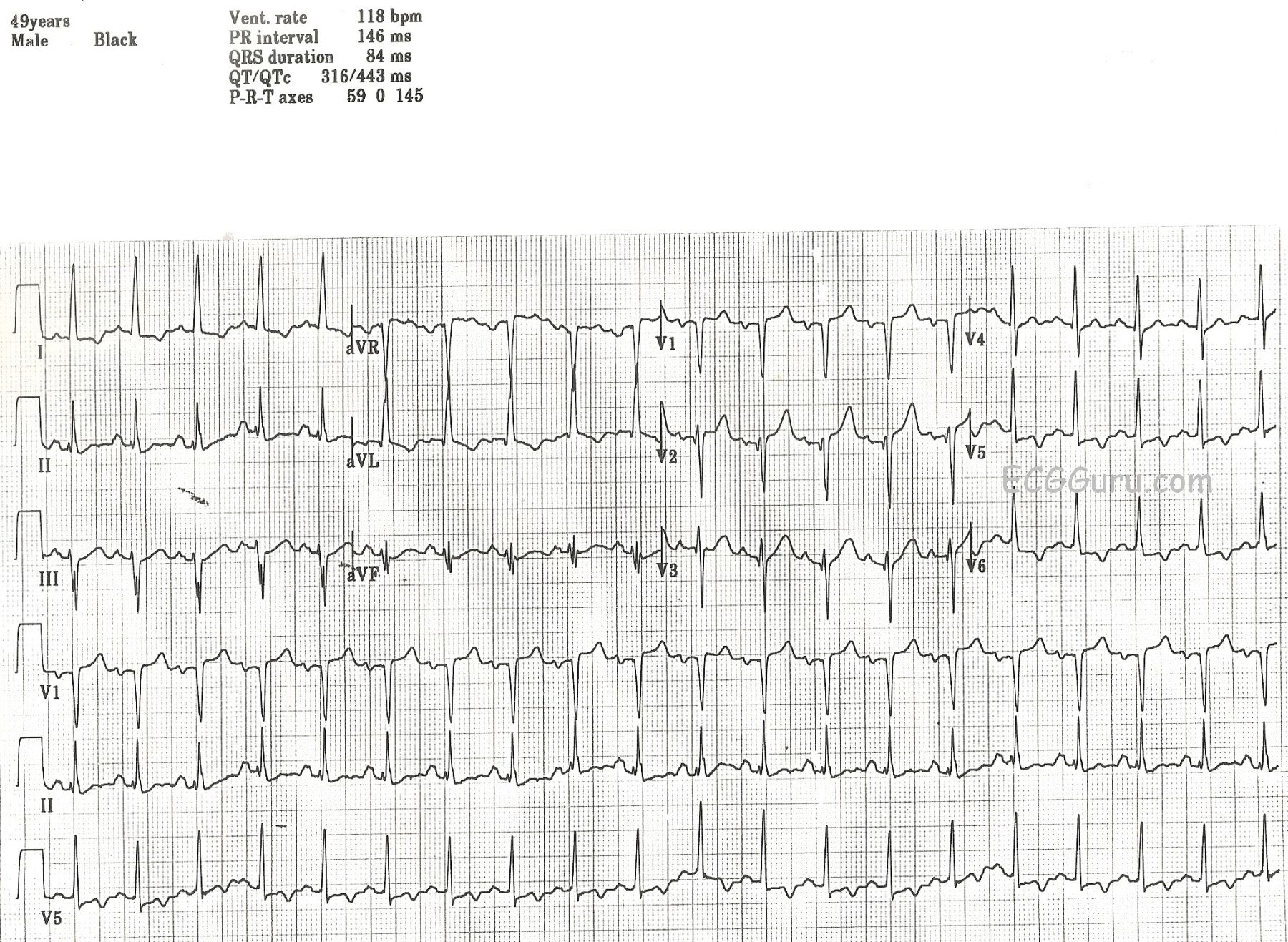
Jason's Blog: ECG Challenge of the Week for March 24th - 31st.

Patient's clinical data:  47-year-old black man.  Another serial ECG (seen below) showed a supraventricular tachycardia (SVT) at a rate of 164/min that was diagnosed by an Electrophysiologist as atrioventricular nodal reentrant tachycardia (AVNRT).  How does knowing the mechanism of AVNRT help you in determining the nature of the mechanism in this week's ECG.  

jer5150's picture

Jason's Blog: ECG Challenge of the Week for Feb. 24th - March 3rd.

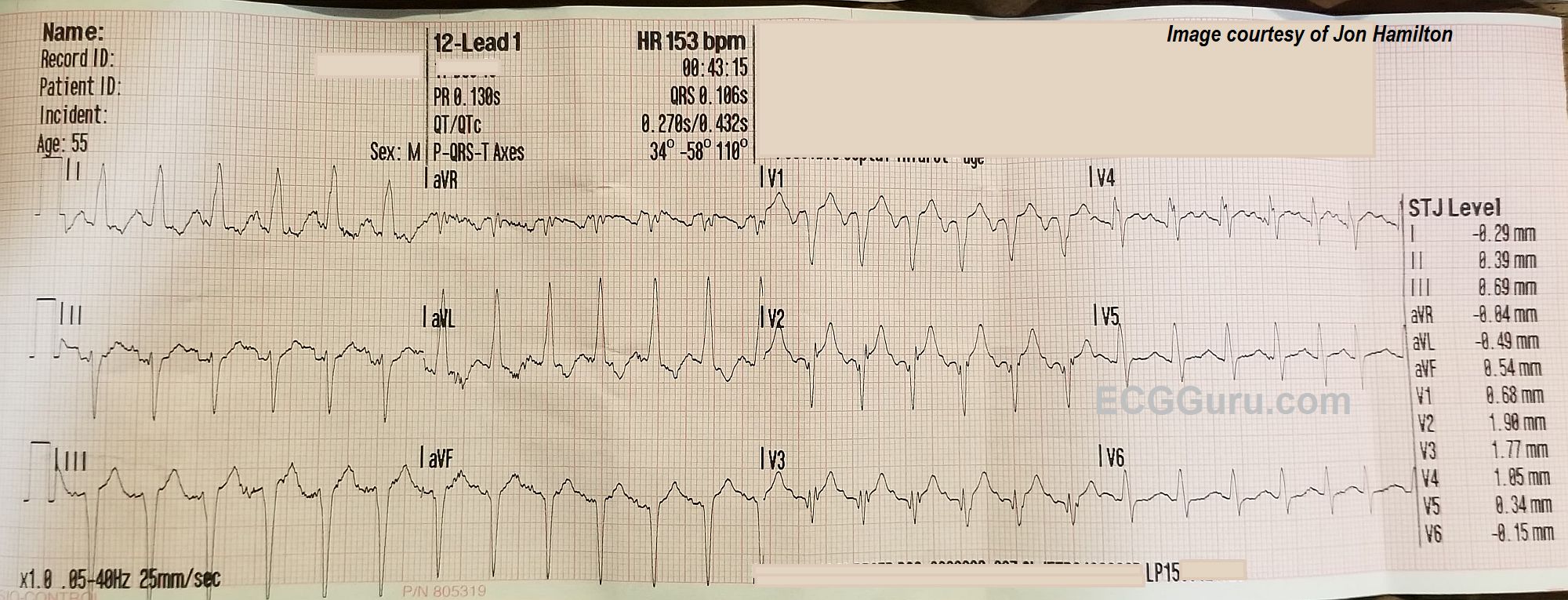
Patient's clinical data:  55-year-old white man admitted to the surgical intensive care unit (SICU). 

Part of the computer's interpretation was:
Sinus tachycardia 1st degree AV block Occasional
Premature supraventricular complexes

DO YOU AGREE WITH THE COMPUTER?

Sinus Tach vs SVT In An Inebriated Patient

Sat, 12/29/2012 - 16:21 -- Dawn

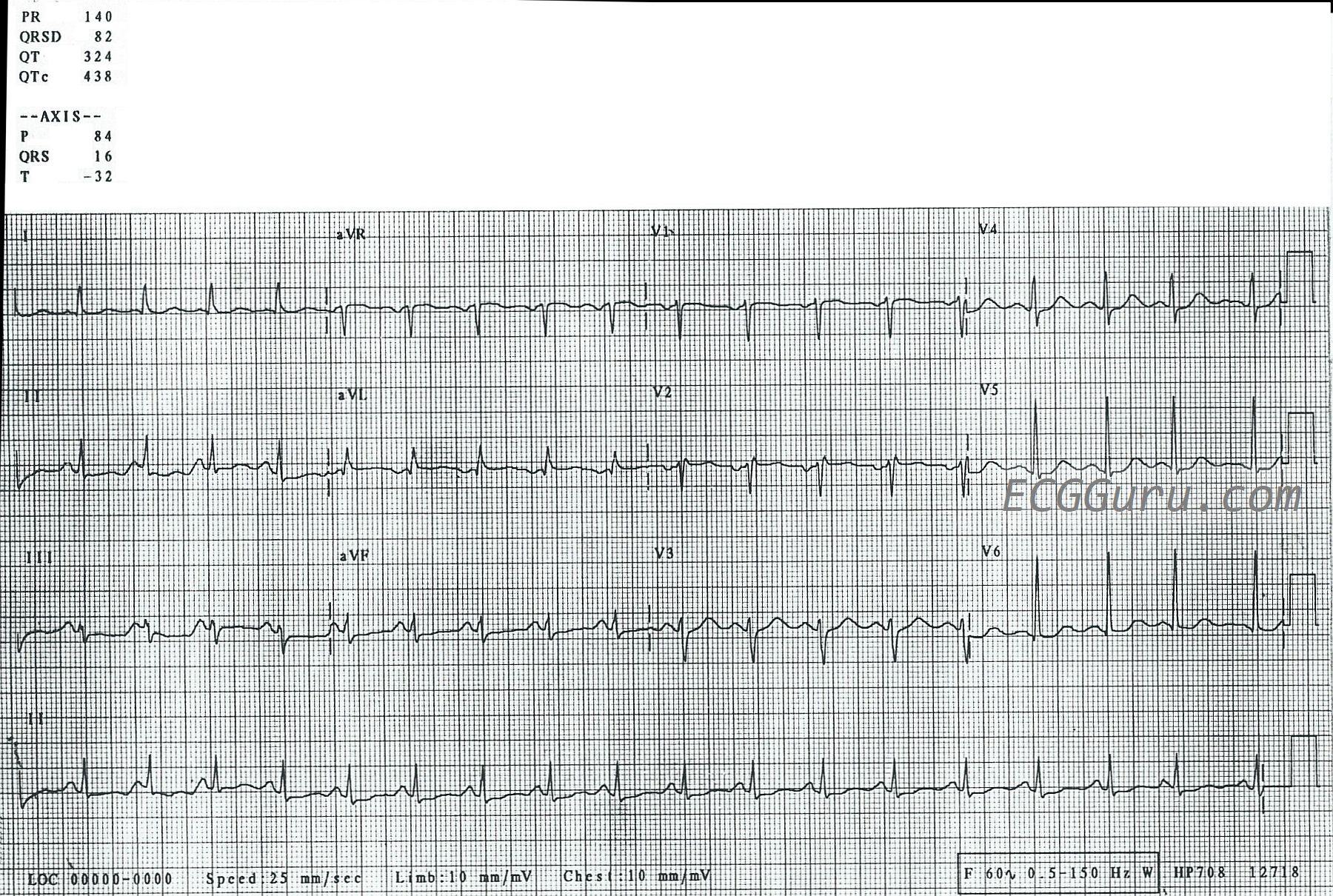
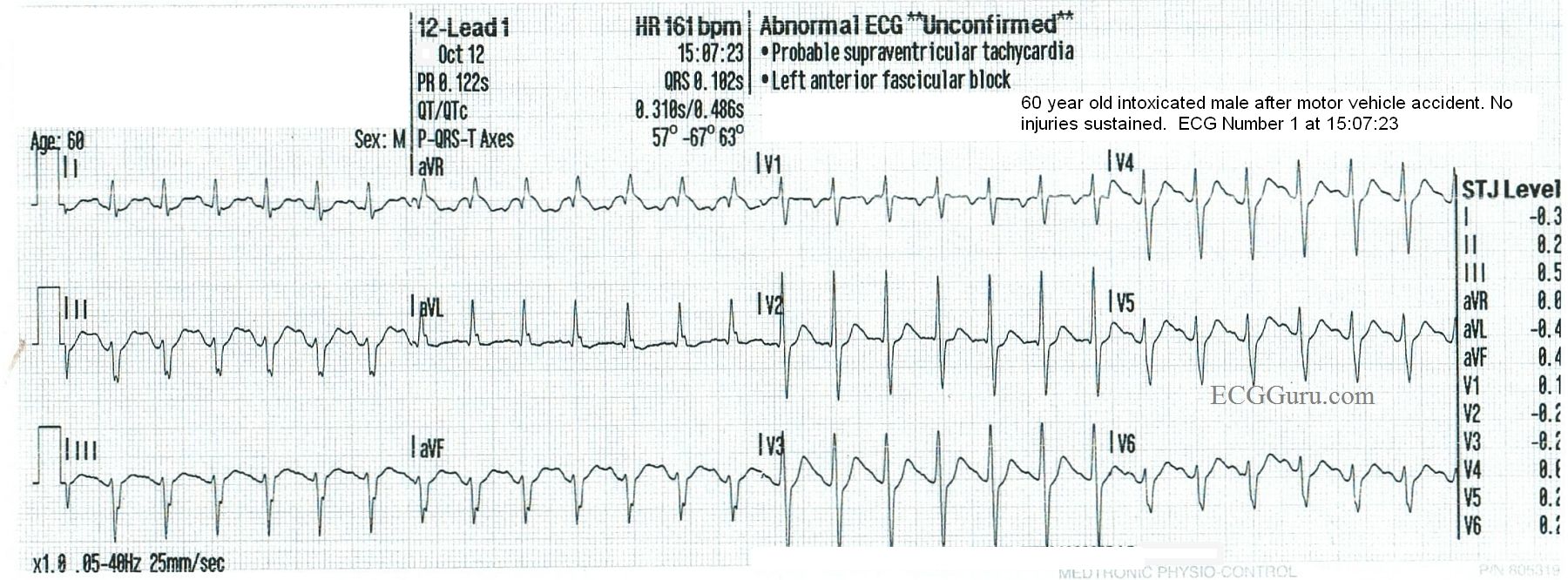
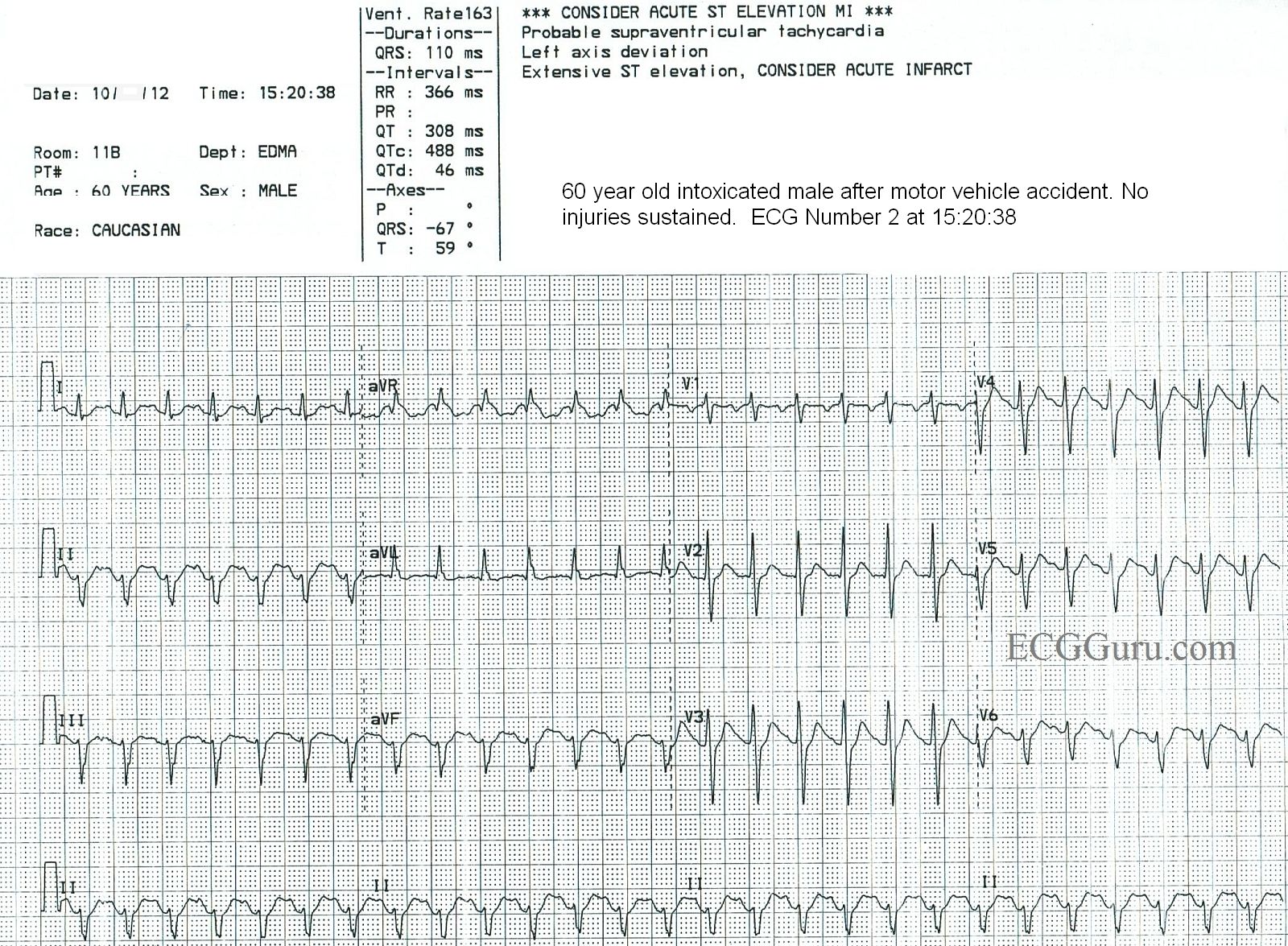
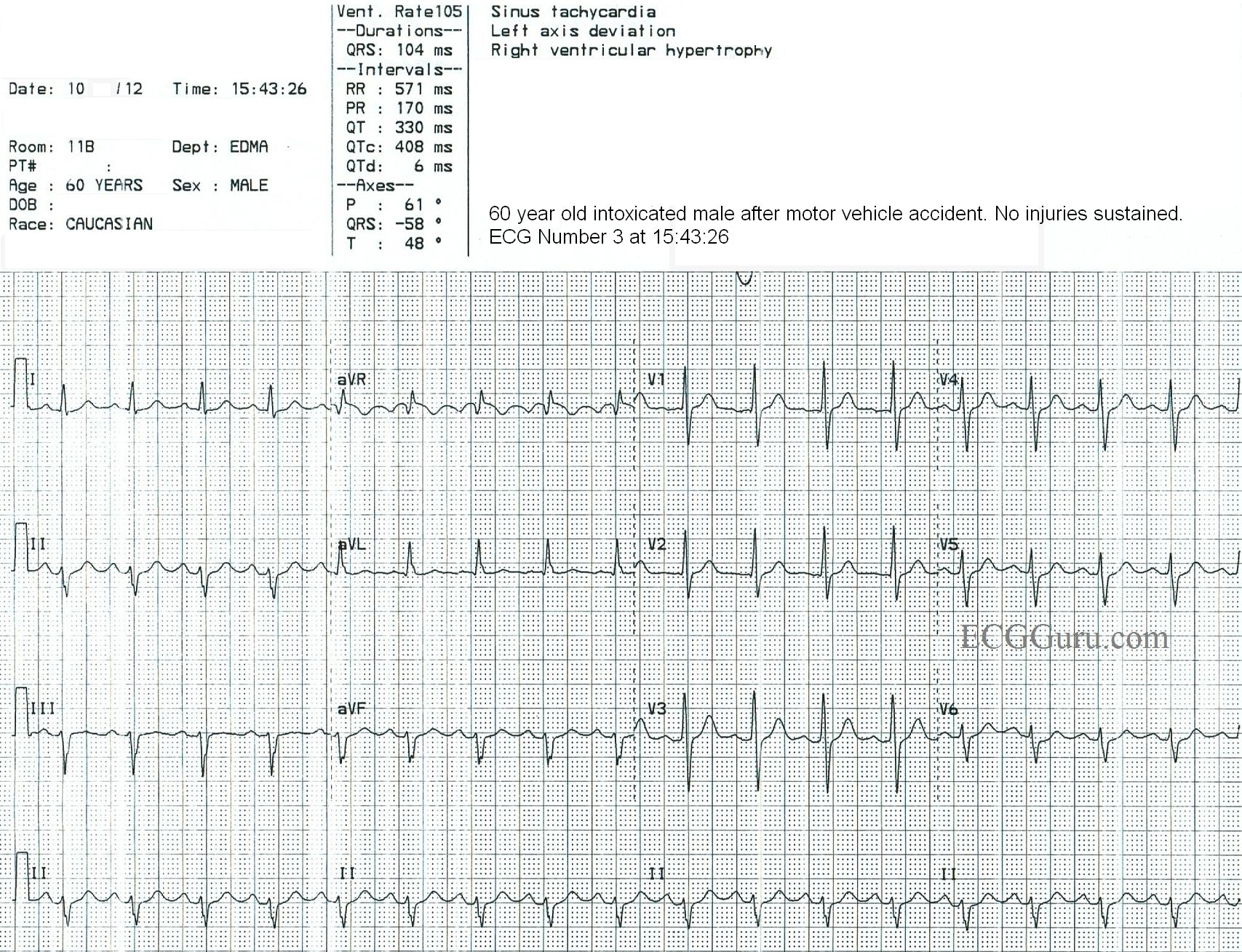
This series of ECGs was obtained from a 60-year-old man who was involved in a one-car accident.  He sustained no injuries, but his blood alcohol level was far above the legal limit for intoxication at over 300 mmol/L.  ECG No. 1 shows the ECG obtained by paramedics in the field, which they incorrectly interpreted to be atrial fibrillation.  No medication was given.  The ER physician obtained ECG No. 2, and considered sinus tachycardia as the diagnosis, but also, because of the fast rate and the fact that the rate had not changed for at least 15 minutes, he considered SVT or atrial flutter with 2:1 conduction.  The ERP administered diltiazem (Cardizem) to the patient, which resulted in ECG No. 3.  The transition to the slower rate was not captured on rhythm strips, but the nurse's notes showed a gradual change over 15 minutes from a rate of 160 to 105/min.  

Usually, on the Instructors' Collection ECGs, we like to give the "answer".  In this case, however, there will undoubtedly be some discussion regarding what went on.  This discussion can be useful if you are teaching intermediate to advanced students.  Questions to consider:  1) Is the fast rhythm an SVT and, if so, which one?  2) Is it sinus tachycardia and, if so, what are the effects of the car accident and the alcohol?  3) Is the left anterior fascicular block relevant? (Criteria are left axis deviation, slightly widened QRS complex at 110 ms, no other obvious reason for the axis deviation). 4) Is the ST elevation in the inferior wall during the tachycardia a sign of acute M.I.?  The patient was lost to followup, so it is not known whether the ST changes were investigated.  Note the flat ST segment and inverted T waves in V1 during the tachycardia that resolve when the rate decreases. 

Please log in to register your comments on this interesting series.

jer5150's picture

Jason's Blog: ECG Challenge of the Week for Sept. 30th - Oct. 7th.


This is another one of those instances where I fortuituously viewed this ECG the day it was performed in our triage department several years ago. I immediately knew what was happening here but apparently nobody in the emergency department saw the obvious clues.

Left Bundle Branch Block with Sinus Tachycardia

Tue, 11/01/2011 - 11:11 -- Dawn

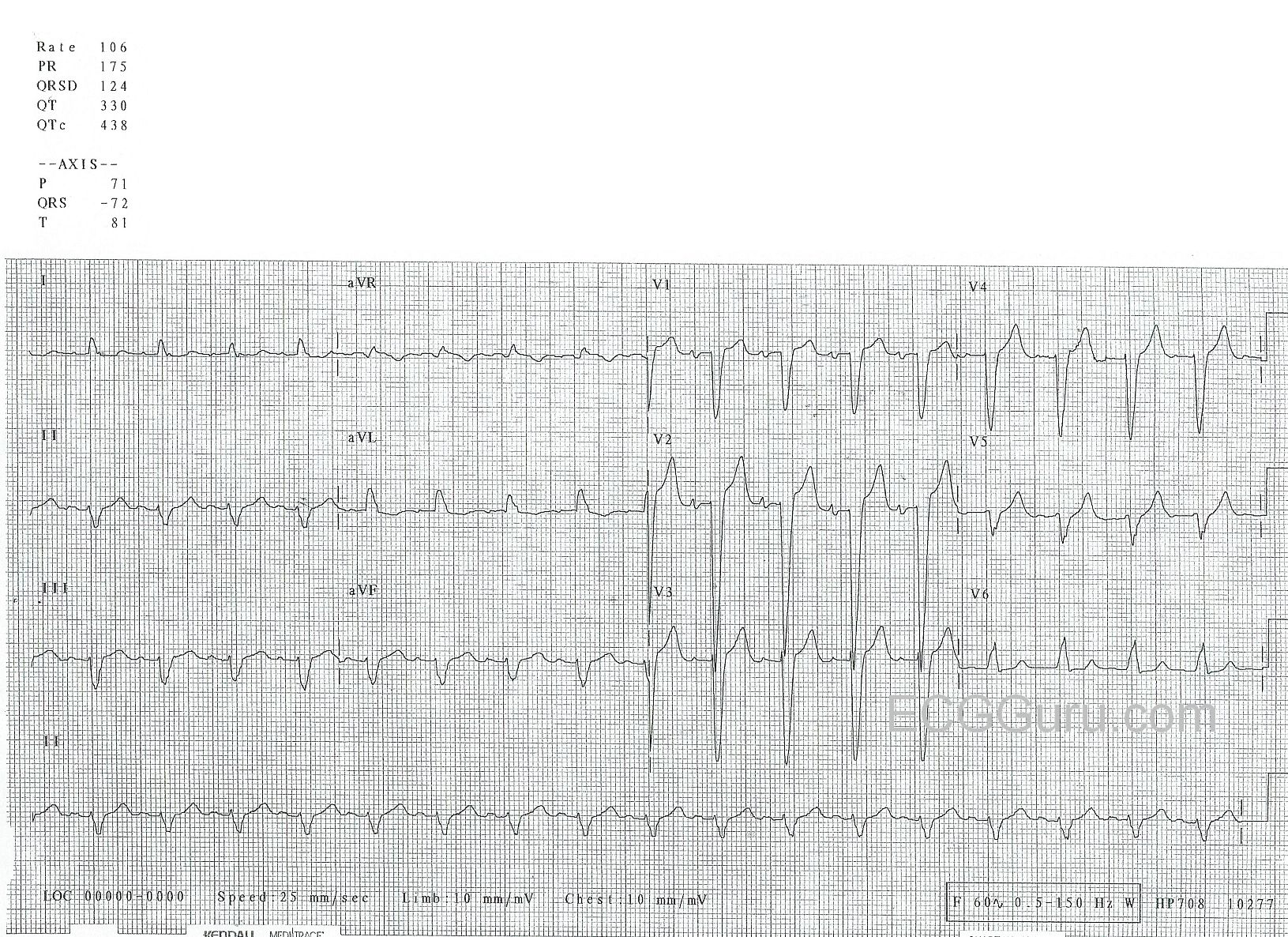
This is a great ECG to demonstrate the criteria for left bundle branch block:  supraventricular rhythm, wide QRS, negative V1, and upright Lead I and V6.  The supraventricular rhythm is proven by easily seen P waves.  Good tracing to begin a discussion of wide complex tachycardias - supraventricular vs. ventricular rhythms.

 
Subscribe to RSS - Sinus tachycardia