ECG Guru - Instructor Resources

A gathering place for instructors of ECG and cardiac topics.


Subscribe to me on YouTube

Ask the Expert

Do you have any "tricks of the trade" for teaching complex ECG topics?

Wed, 05/01/2013 - 18:06 -- Dawn

Our expert today is Dave Richley.            

Dave Richley worked as a clinical cardiac physiologist, in echo, pacing, Holter etc, for over 30 years in various hospitals in North-east England, but for the last few years he has been employed almost entirely in an educational capacity. He teaches undergraduate and postgraduate clinical physiology degree programmes at Sunderland and Newcastle Universities and is currently engaged in a project with the British Heart Foundation, the UK’s leading heart disease charity, to deliver courses in ECG interpretation to cardiac nurses. His particular interest within the field of electrocardiography is complex bradyarrhythmias and conduction disturbances.

"I believe that in this era of high-tech multi-modality imaging, the subtle and complex art of ECG interpretation has become something of a forgotten art and my mission is to see electrocardiography restored to its former and rightful pre-eminent position in diagnostic cardiology!" – Dave Richley


ANSWER:


For teaching all but the simplest of topics I am increasingly using pictures. Verbal explanations of ECG phenomena, to those who are not that familiar with the sequence of electrical events and the anatomy of the conduction system in the heart, can be difficult to understand. I have therefore produced a simple picture of the heart on which I superimpose various arrows and other shapes, as appropriate, to help me illustrate various phenomena. Below is an attempt to explain with the help of simple diagrams the different ECG manifestations of complete AV block at the level of the AV node and below the AV node in the ventricles. I have no artistic ability and no special software – I make all my pictures within Powerpoint using the standard drawing tools available.


To explain more complex arrhythmias, I need more complex pictures, and I find that laddergrams serve this purpose very well. Convoluted verbal explanations of complicated arrhythmias may just cause bafflement. The ECG itself is merely a depiction of the sequence of depolarisation of the muscle mass of the atria and ventricles; crucially it does not explain  conduction – or lack of conduction – directly; these phenomena must be inferred or deduced, and the laddergram is excellent for illustrating the origin and direction of propagation (or failure of propagation) of electrical impulses through the heart. Those inexperienced in ECG tend to assume that if a P wave is seen immediately before a QRS, this indicates that the atrial impulse is conducted to the ventricles. Of course, this is usually the case, but in AV dissociation this relationship between P wave and QRS may be purely coincidental. This is a phenomenon that can be illustrated very clearly with a laddergram.  I have tried to use the laddergram below to illustrate what is happening in a case of high grade AV block, with the blocks of pink representing ventricular refractoriness. There are no rules governing laddergrams, just conventions, and I think that people should be free to construct them as they wish in order to illustrate the explanations they are trying to convey. The only absolute requirement is that the deflections of the ECG must be exactly simultaneous with the corresponding lines on the laddergram. There are several ways of constructing laddergrams; my own method is to produce them within Powerpoint by inserting shapes – mostly just straight lines – and copying and pasting them into the correct positions. With practice, this can be done quite quickly.


How do you explain the changing PR intervals in the following series of strips, and is the mechanism related to Wenckebach conduction?

Wed, 12/05/2012 - 23:11 -- Dawn
RP - PR Reciprocity, PR Intervals

Our expert today is our very own Jason Roediger, who is an ECG Guru blogger, and frequent contributer to the Ask the Expert page.  His blog, ECG Challenges, offers you a chance to try your skills and get feedback from Jason.  He has a special interest in complex arrhythmias, and is adept at constructing laddergrams that help clarify the mechanisms involved in the rhythms. His bio can be found on the "About Us" page, or on his previous contributions to this page.

Strips courtesy of R.O. from California, USA.

ANSWER:


I opted to only construct a laddergram for the middle rhythm tracing rather that for all 3. The bottom strip didn't deserve one since it is only showing sinus rhythm with no ectopy. The top 2 are more-or-less identical in content. However, the middle one was of slightly better diagnostic quality.

This is a classic representation of "R-P/P-R reciprocity". There is a near-linear relationship between the P-R (or P'-R) intervals and their associated R-P (or R-P') intervals. Along the right margin of the tracing, I have compiled a list of the longest R-P interval at the top which is associated with the shortest P-R interval (i.e., 81 / 29). Conversely, at the bottom of the list, the shorted R-P interval is associated with the longest P-R (i.e., 45 / 50). The two lines that I've circled are the only inconsistancy in the logic but are well within an acceptable margin of error. 


This patient definitely has A-V nodal disease and at a faster atrial rate, they would undoubtedly develop Type I A-V block (Wenckebach periodicity) and start "dropping" beats. Whenever you encounter longer P'-R intervals on the APBs, you always have to consider the possibility that conduction jumped over from the fast pathway to the slow pathway which is the initiating mechanism seen in AVNRT. I think that all of the atrial impulses are conducting via the fast pathway (FP) here but the FP is exhibiting varying conduction delays depending on how short or long the preceding R-P interval is. As I've illustrated in the laddergram, you can see that the amount of time it takes for the sinus node to recover after an APB is essentially equal to the basic sinus cycle (e.g., 110 = 111). Dr. Charles Fisch graphically charted R-P/P-R relationships in his book "Electrocardiography of Clinical Arrhythmias" on pages 28 and 29. If you were to chart the R-P and P-R intervals on a graph, they would form a diagonal line that is about 45-degrees. If you don't have Dr. Fisch's book in your personal library, you should really buy a copy. I refer to it all the time!


How do you explain the difference between "AV block" and "AV dissociation" to your students?

Tue, 11/06/2012 - 12:03 -- Dawn

 Our Expert today is Christopher Watford, BSc, NREMT-P 

Christopher began in EMS as an EMT on a volunteer industrial fire brigade at GE's Global Nuclear Fuels facility in Wilmington, North Carolina. He has worked there as a Lead Software Engineer since 2001 and currently is a Captain on the fire brigade. Outside of his day job, he volunteers as a Paramedic and Field Training Officer for Leland Volunteer Fire/Rescue where he also serves on the board of directors.Through Cape Fear and Brunswick Community Colleges heteaches continuing educat ation for all levels of providers. He also is an associate editor for the EMS 12-Lead Blog and Podcast, presenting electrocardiography case studies for pre-hospital personnel. 

Christopher's excellent blog can be found at My Variables Have Only Six Letters.  His contributions to EMS 12-Lead can be found at this link.


Answer:

I think the first step in understanding the difference between an  atrioventricular block and atrioventricular dissociation is to have a  firm understanding of physiological and pathological conduction.  The most common example of this is a non-conducted premature atrial  contraction (PAC). If an atrial stimulus arrives early enough at the  atrioventricular node (AVN), while it is still refractory, forward  conduction will be blocked. Likewise in atrial flutter, you typically  see one ventricular activation for every two F-waves, due to the  physiological rate limiting by the AVN. However, as this is due to the physiological function of the AVN we would not consider this a block!

 In higher degree AV blocks, we encounter a pathological decrease in  conduction and so we label non-conducted stimuli as "blocked". Type I  and Type II AV blocks provide visual confirmation of pathological conduction as you have examples of both conducted and non-conducted stimuli.  However, in the case of a presumed complete AV block, it is important  that you look at whether the atrial impulses were blocked or simply not conducted. With monomorphic ventricular tachycardia you may see  uncoordinated atrial and ventricular impulses on the ECG. In this case  the ventricular rhythm and the atrial rhythm "compete" for access to  the AV nodal tissue. There is no "AV block" present, instead we say they are "dissociated" from the ventricular rhythm. More specifically,  we say that the atrial rhythm is dissociated from the ventricular rhythm due to usurpation. Best illustrating the competitive nature of two rhythms during dissociation are capture or fusion beats.

 Therefore when classifying dyssynchrony between the atria and ventricles, students should look to see whether conduction blocked due to pathological processes or because the AV node is appropriately refractory.


Do you have some "Tricks of the Trade" to share with other ECG instructors?

Fri, 10/26/2012 - 22:30 -- Dawn

Our expert today is Darlene Hutton, RN, BScN, MSN

She has worked in CCU, ICU, PACU, and Emergency as a bedside nurse, educator, and manager. She is currently working as a Clinical Research Manager at Rouge Valley Metabolic Research Associates in Toronto. Darlene also is an Educational Consultant providing workshops, seminars, and conferences on such topics as ECG Interpretation, Dysrhythmia Interpretation, Acute Coronary Syndromes and Cardiology Drugs. She is also an ACLS Course Director and runs courses throughout the province. Her company, QRS Educational Services, founded 18 years ago, provides education to nurses and other health care professionals throughout Canada. She is also the Department Head for Emergency Preparedness in the O.R. in the American College of Plastic Surgical Nursing journal. 

Darlene@qrseducation.com 

(905) 706-3301 

www.qrs-education.com 

www.facebook.com/qrs.educationservices


Answer:

I sure do have lots of tricks to help me retain what I learn and I pass these tricks to those that I spend time teaching. The reason I have developed these tricks is because I have found that I best learn from visual demonstration and KISS principles, not only that; but, if we make things too complicated from the get-go, people won't want to learn the concepts.


Trick #1: Using the RIRI approach to ECG assessment. The acronym RIRI reminds us to check Rate, Intervals, Rhythm, and Ischemia/Infarction. We need a fast, reliable method to systematically look at and ECG. I can't tell you how many times people rush to checking out the ST segment elevation which is plainly there and overlook the fact that the patient is in a bundle branch block or in a 3rd degree AV block. I have established this method for assessment over 15 years ago, teach is regularly, and use it myself. If you want to add a diminsion to the assessment, you can always throw in axis determination right when doing the Intervals; specifically the QRS interval.


Trick #2: Bundle branch blocks: Goodness, how this has gotten complicated. It really isn't. If there's a P wave in front of a wide QRS complex, that's a bundle branch block. Otherwise, if there is no P wave with a wide QRS complex, it would be a ventricular rhythm. Here comes the fun part, when you've established there is a bundle branch block, take a look at V1 on the 12 Lead ECG. If V1 is "upright", you have a "right" bundle branch block. If V1 is "down low", you have a "left" bundle branch block. There are many other quick, neat ways that also work, but it is difficult to explain without physically showing you. The most important part of determining a bundle branch block is knowing that a "left" will often mask an acute coronary syndrome; specifically an MI. Right bundle branch blocks don't tend to mask MIs nearly as much. So, forget the misconception about "bunny rabbit ears", or the confusion of "slurred S waves in the lateral leads". Keep it simple and you'll remember forever. Upright = right, Down Low = Left.


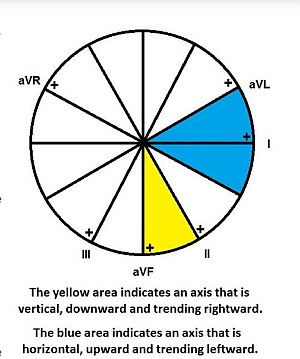
Trick #3: Axis is another area that has been so complicated and unnecessarily so. The first thing I share with my students is what axis is and the various non-critical causes of an abnormal axis: pregnancy, obesity, hypertrophy, pulmonary stenosis, neonates, pulmonary hypertension, previous MIs, and others. These are all conditions that do not occur overnight and do not cause concern for an abnormal axis. The second part that I share when teaching axis, is the "how". You need a simple, uncomplicated method to teach and remember axis. I was first taught, and still remember the 7 steps along with plotting, to determine the exact degree of axis. It dawned on me quite a few years after, that the cardiologists I worked with simply reported "axis normal, right, left, extreme". Why were we, perhaps still are, taught a method that few people retain? So, here's the simple, way I teach it for better retention: 


Normal:


Extreme:


Left:


Right:


Lead I


Lead II


When looking at axis, look at Leads I and II


Normal="2 thumbs up", both I and II's QRS are upright


Extreme="2 thumbs down", both I and IIs' QRS are negative


Left = "knees apart", that's a lewd way to sit


Right= "knees together", that's the "right" was to sit.


For those who want to understand axis, they need to understand when an abnormal axis is a concern. In my opinion, the cardiac patient who has just had an anterior MI with a right bundle branch block is the patient you need to be supervigilant on looking at their axis. Why? Well, if their axis suddenly changes in this situation, it's likely because that patient has just blocked off the last remaining electrical circuit in their ventricles and may very likely develop syncope and significant bradyarrhythmias.

If you're going to teach axis, you need to understand it well yourself and you need to understand hemi-blocks and bifascicular blocks, and teach these concepts in a non-complicated manner.


Hope these tricks help.


How much time should the entry-level paramedic program allot to ECG training, and how much should be rate and rhythm vs. 12-lead interpretation?

Wed, 10/24/2012 - 21:06 -- Dawn


Our Expert Today is Marjorie Bowers, EdD, RN, Paramedic

Dr. Bowers has been involved in emergency medicine since 1968. Her wide range of experience includes emergency nursing, flight nursing, street paramedicine, and EMS education. Currently, she serves as a team member on both a federal Disaster Medical Assistance Team (DMAT) and a State Medical Response Team (SMRT).  Dr. Bowers holds a doctoral degree in higher education from Florida State University and a Master’s Degree in Educational Leadership from Florida Atlantic University. She is a Florida certified paramedic and Registered Nurse.  During her 26-year tenure at Indian River State College in Ft. Pierce, Florida, she received the State of Florida EMS Educator of the Year award, was an appointee to the Florida EMS Advisory Council, was chosen as one of only a few educators nationwide to serve on the Educational Standards Curriculum Revision Committee for the National Assoc. of EMS Educators and NHTSA. During this time, she also authored numerous self-studies for both EMT and paramedic programs and participated in successful state and national accreditation site visits. She currently is a team leader for paramedic program site visits for the Committee on Accreditation of Educational Programs for the EMS Professions.

Throughout her career, Dr. Bowers has assisted thousands of EMT and paramedic students to successfully  complete National and State of Florida certifying exams. She has developed and delivered presentations at numerous local, regional, state, and national meetings and conferences.

Answer:

That is a very good question and a very hard one to answer. The problem in answering this question is that paramedic programs vary significantly in length all across the US.  Also, some students will pick up ECGs very quickly where others struggle and may never be really proficient in them.

You can  probably teach basic rhythm interpretation in about 8-12 hours. That includes review of cardiac A&P. However, really learning ECGs takes practice. All instructors who have contact with paramedic students should quiz them from the time they learn rhythms until they finish the program.  

At the beginning of the 2nd semester, we reviewed ECG interpretation from 1st semester and then completed all of the rest of the rhythms. Again, once or twice a week, they would have ECGs on quizzes and always on tests.

In addition, students had ECG assignments to complete in clinical and ride time each semester. They could use textbooks or ECGs of real patients. By the time they finished the program, each student had IDs probably close to 1000 ECG strips (in class, lab, clinical, ride time).

12 lead probably could be taught in about 6-8 hours if you are including recognition and treatment of MI and angina and mimics. That would also include initial training on lead placement or review of lead placement if the students had already been trained on that skill.

During this class, I think it is important to keep practicing strips. Making each student “walk” you through the process of interpretation is helpful also.

Then again, practice, practice, practice. Keep going over the 12 lead strips in class, lab, clinical, and ride time.

Obviously, these times are relative to how long your program is.

For information about Dr. Bowers’s upcoming classes, contact Dr. Marjorie Bowers, Consulting, LLC at mbowers22@gmail.com.

If I teach an INTERMEDIATE 12-Lead ECG class, what topics do you think I should include?

Wed, 10/03/2012 - 16:31 -- Dawn

Our Expert Today Is Darlene Hutton.  Darlene has worked in CCU, ICU, PACU, and Emergency as a bedside nurse, educator, and manager. She is currently working as a Clinical Research Manager at Rouge Valley Metabolic Research Associates in Toronto. Darlene also is an Educational Consultant providing workshops, seminars, and conferences on such topics as ECG Interpretation, Dysrhythmia Interpretation, Acute Coronary Syndromes and Cardiology Drugs. She is also an ACLS Course Director and runs courses throughout the province. Her company, QRS Educational Services, founded 18 years ago, provides education to nurses and other health care professionals throughout Canada. She is also the Department Head for Emergency Preparedness in the O.R. in the American College of Plastic Surgical Nursing journal.


Darlene@qrseducation.com

(905) 706-3301

www.qrs-education.com

www.facebook.com/qrs.educationservices


Answer:

This is a great question and one that has been trialed a few different ways over the past 20 years by me.

At QRS Educational Services, we provide a one-day ECG Course that facilitates issues with time-constraint. This course nicely supplements the 12 week Coronary Care Level II offered at a few of the community colleges in the province on Ontario. This course also is a great stand alone for novices to experts. I stress that the novices will learn about a normal vs abnormal ecg. They may not be able to "label" or "diagnose"; however, they will be able to call the physician at 2am and describe what it is they see. For them, the objective is to learn the recognition and anticipated treatment of ST segment elevation, depression, T wave inversion. They will also learn the anticipated complications of the big inferior and anterior MIs. For those who are intermediate, I stress that their objective for the day is to get a better understanding of the bundle branch blocks, and the "why" of what they do. For example: why do you give saline boluses to the inferior MI who's blood pressure is low, but you have to give an inotropic drug to someone having an anterior MI with a low blood pressure. For the advanced nurses, mentors, educators who attend this day, they get another perspective of how to teach these concepts to newer staff, a Train the Trainer approach.

I have decided many years ago to drop the Axis determination component on the day for a few reasons. It takes about 15 minutes out of other concepts I feel are more important for the patient having an ACS and I feel that the relevance of an abnormal axis is so rarely a big deal. I do mention that for those who are more advanced in their ECG skills, I can gladly add the axis content at the end of the day, and sometimes a few people do stay behind to go over it. For those who are advanced, I explain what axis is and I explain the conditions that can make it become abnormal (many of which are not life-threatening) and I end with a quick and very easy method to assess if the axis is normal, right, left, or extreme. I have stopped using the approach of determining the actual degree of axis after working with many cardiologists who seemed to be just concerned with the fact it was abnormal not what the actual degree of abnormality was. I truly believe that for people to understand the important concepts of axis determination, we need to keep the topic as uncomplicated as possible. Easily done.

So to recap, this is what I feel are the important concepts to include in a day of ECG interpretation:

-a systematic approach to ECG assessment (I use the RIRI approach: rate, intervals, rhythm, ischemia/infarction). The day follows this approach

-importance of a quick interval determination (normal or abnormal, is it a concern? AV Blocks, Bundle Branch Blocks, Long QT Interval)

-St segment determination

-what is ACS and how to treat

-what are the anticipated complications of the anterior and inferior MIs and why?

-lots of practice

Last, I emphasize that for the novice, they will walk away with at 20% more information that what they walked in with. Many times, these people will take the year to put into place what they have learned. Then, I see them again the following year and despite the course being pretty much the same, they feel it's different. To them, it feels different because they're now learning the next 20% from what they've retained the previous year.


Questions for Darlene?  Please put them in the Comments section below.


To share your own answer to this question, please go to the Instructors' Forum.


What are your recommendations for teaching paramedics whose protocol for the topic you are teaching is not in line with what you normally teach, or know to be current standard of care?

Wed, 09/19/2012 - 15:48 -- Dawn

Our Epert today is Marjorie Bowers,  EdD, RN, Paramedic r. Bowers has been involved in emergency medicine since 1968. Her wide range of experience includes emergency nursing, flight nursing, street paramedicine, and EMS education. Currently, she serves as a team member on both a federal Disaster Medical Assistance Team (DMAT) and a State Medical Response Team (SMRT). Dr. Bowers holds a doctoral degree in higher education from Florida State University and a Master’s Degree in Educational Leadership from Florida Atlantic University. She is a Florida certified paramedic and Registered Nurse. During her 26-year tenure at Indian River State College in Ft. Pierce, Florida, she received the State of Florida EMS Educator of the Year award, was an appointee to the Florida EMS Advisory Council, was chosen as one of only a few educators nationwide to serve on the Educational Standards Curriculum Revision Committee for the National Assoc. of EMS Educators and NHTSA. During this time, she also authored numerous self-studies for both EMT and paramedic programs and participated in successful state and national accreditation site visits. She currently is a team leader for paramedic program site visits for the Committee on Accreditation of Educational Programs for the EMS Professions.

Throughout her career, Dr. Bowers has assisted thousands of EMT and paramedic students to successfully  complete National and State of Florida certifying exams. She has developed and delivered presentations at numerous local, regional, state, and national meetings and conferences.


For information about Dr. Bowers’s upcoming classes, contact Dr. Marjorie Bowers, Consulting, LLC at mbowers22@gmail.com.


 ANSWER:   

First and foremost, you are always responsible for knowing and following your protocols. Deviations, even if there is possibly a better way to care for a patient, are not acceptable. Not following protocols, can be legally devastating to you and your department/service.

So, as a training officer, you are obligated to teach the protocols as written. However, you certainly can present new, current, or “cutting edge” treatments to the employees. Just be careful not to criticize your protocols.

It has been my experience that if you present new things (drugs, skills, equipment, treatment modalities), there is usually one or two people who become curious about these things and do more research into it. This is how protocols, many times, get changed. 


Besides STEMI recognition, what do you believe paramedic students should learn about 12-Lead ECG?

Sat, 07/14/2012 - 02:39 -- Dawn

Our Expert Today is Marjorie Bowers, EdD, RN, Paramedic      Dr. Bowers has been involved in emergency medicine since 1968. Her wide range of experience includes emergency nursing, flight nursing, street paramedicine, and EMS education. Currently, she serves as a team member on both a federal Disaster Medical Assistance Team (DMAT) and a State Medical Response Team (SMRT).Dr. Bowers holds a doctoral degree in higher education from Florida State University and a Master’s Degree in Educational Leadership from Florida Atlantic University. She is a Florida certified paramedic and Registered Nurse.During her 26-year tenure at Indian River State College in Ft. Pierce, Florida, she received the State of Florida EMS Educator of the Year award, was an appointee to the Florida EMS Advisory Council, was chosen as one of only a few educators nationwide to serve on the Educational Standards Curriculum Revision Committee for the National Assoc. of EMS Educators and NHTSA. During this time, she also authored numerous self-studies for both EMT and paramedic programs and participated in successful state and national accreditation site visits. She currently is a team leader for paramedic program site visits for the Committee on Accreditation of Educational Programs for the EMS Professions.Throughout her career, Dr. Bowers has assisted thousands of EMT and paramedic students to successfully  complete National and State of Florida certifying exams. She has developed and delivered presentations at numerous local, regional, state, and national meetings and conferences.

For information about Dr. Bowers’s upcoming classes, contact Dr. Marjorie Bowers, Consulting, LLC at mbowers22@gmail.com.


Answer:

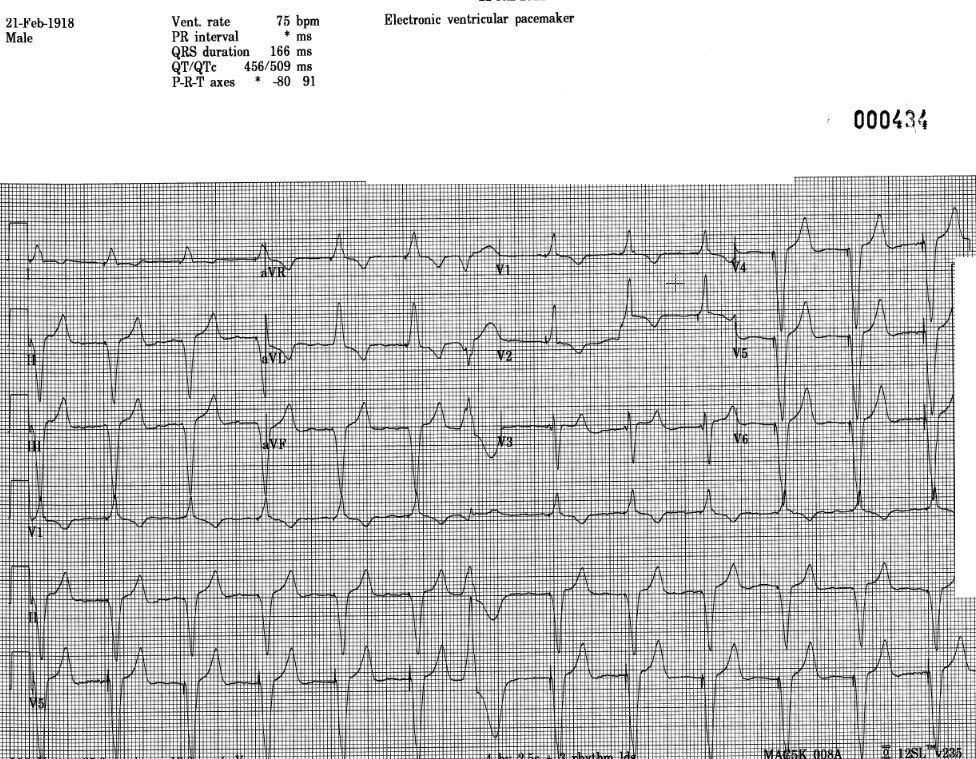
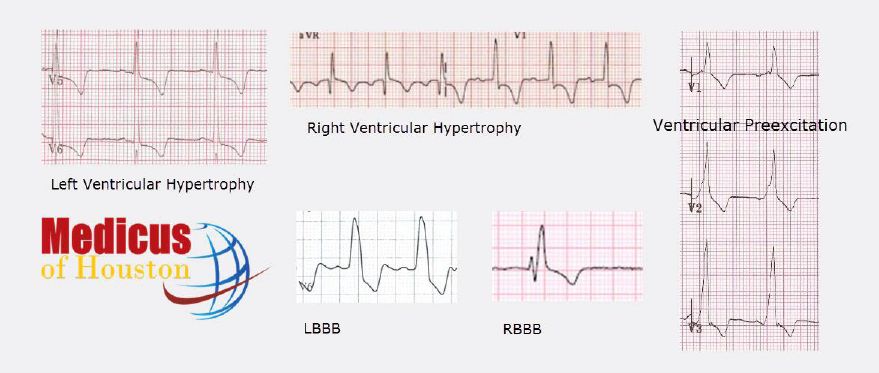
I think it is important for them to be able to identify the common mimics that cause ST elevation.  At the very least, right and left bundle branch blocks, left ventricular hypertrophy, pacemaker rhythms and ventricular rhythms.

Most paramedic students are taught pacemaker and ventricular rhythms, but they may not be proficient in identifying them on a 12 lead.

Early repolarization is good to learn, but my experience has been that it is a little more difficult to identify.I know that some programs teach axis deviation, however, I think this is a little more advanced than most paramedic students need to know. It is certainly good knowledge, but I would save it for an advanced 12 lead class rather than the basic one usually taught in the paramedic program.


How Do You Teach Early Repolarization Vs. Acute M.I.?

Sun, 07/08/2012 - 13:51 -- Dawn

Our expert today is Dr. Ken Grauer, M.D., a frequent contributer to the ECG Guru.

KEN GRAUER, MD is Professor Emeritus (Dept. Community Health/Family Medicine, College of Medicine, University of Florida in Gainesville).
Dr. Grauer has been a leading family physician educator for over 30 years. During that time he has published (as principal author) more than 10 books and numerous study aids on the topics of ECG interpretation, cardiac arrhythmias, and ACLS (including an ongoing Educational
ECG Blog
) .

Answer:

For my answer, please check out my FULL REVIEW on assessing ST Elevation from Early Repol vs Acute MI - GO TO: https://www.kg-ekgpress.com/ecg_-_early_repolarization/

FOR ECG SHOWN HERE:    Early Repol - OR - Anterior STEMI? The ANSWER in ECG BLOG #47 (http://ecg-interpretation.blogspot.com/2012/07/ecg-interpretation-review-47-normal.html ).


How Do You Explain the Genesis and Significance of Ventricular Bigeminy to Your Students?

Sun, 03/18/2012 - 13:25 -- Dawn

Our expert today is Darlene Hutton. She has worked in CCU, ICU, PACU, and Emergency as a bedside nurse, educator, and manager. She is currently working as a Clinical Research Manager at Rouge Valley Metabolic Research Associates in Toronto. Darlene also is an Educational Consultant providing workshops, seminars, and conferences on such topics as ECG Interpretation, Dysrhythmia Interpretation, Acute Coronary Syndromes and Cardiology Drugs. She is also an ACLS Course Director and runs courses throughout the province. Her company, QRS Educational Services, founded 18 years ago, provides education to nurses and other health care professionals throughout Canada. She is also the Department Head for Emergency Preparedness in the O.R. in the American College of Plastic Surgical Nursing journal.

Answer:

I PERSONALLY WENT THROUGH THIS 8 YEARS AGO...FUN TIMES. WHEN I WENT TO MY FAMILY DOCTOR HE STATED THE POTENTIAL CAUSES, IN THIS ORDER WERE: ADRENAL TUMOR, CARDIAC DISEASE. THOSE WERE HIS ONLY 2 OPTIONS. NEEDLESS TO SAY, I AM NO LONGER WITH THIS PRACTITIONER. THE 24 HR URINE WAS NEGATIVE AND THE CARDIAC STRESS TEST DID NOT INDUCE THE BIGEMINY, SO THAT WAS ALSO NEGATIVE. IN MY CASE, THE CAUSE CAN BE ATTRIBUTED TO THOSE WONDERFUL HORMONES THAT ACT UP IN THE PERIMENOPAUSAL PERIOD OF OUR LIVES.  I TEACH STUDENTS THAT THE HEART DOESN'T NORMALLY THROW OFF BIGEMINY, OR MULTIFOCAL PVCS, OR COUPLETS. WHEN IT DOES, WE MUST ASK OURSELVES "WHY?"  COMMON CAUSES ARE: ISCHEMIA (DO AN ECG, THE PATIENT SHOULD HAVE A STRESS TEST AS ANOTHER TEST FOR ISCHEMIA), ELECTROLYTE IMBALANCE (CHECK THE LYTES - HYPERKALEMIA IS ALWAYS A FRONT RUNNER), DRUGS (ONE EXAMPLE IS RED BULL-INDUCED VT IN AN EMERGENCY NURSE WHO DRANKS 3 LARGE CANS DURING HIS 8 HOUR SHIFT).

The significance of ventricular bigeminy may be huge or of little consequence. First, it depends on how my patients looks right at this moment. Are they compromized? Some ventricular beats produce an output while others don't. So, when assessing this patient it is important to determine if there is output with these beats; otherwise what may look like a heart rate of 80 may only be one of 40. If all tests have deemed no significant cause of the bigeminy, then there is really nothing more to be done. Starting on an antiarrhythmic drug, such as amiodarone, would not be recommended as this drug may cause worse side effects that the treatment it's being given for; namely torsade des pointe from a prolongation of the QT interval.


Darlene Hutton, RN, BScN, MSN


Pages