ECG Guru - Instructor Resources

A gathering place for instructors of ECG and cardiac topics.


Subscribe to me on YouTube

Sinus bradycardia

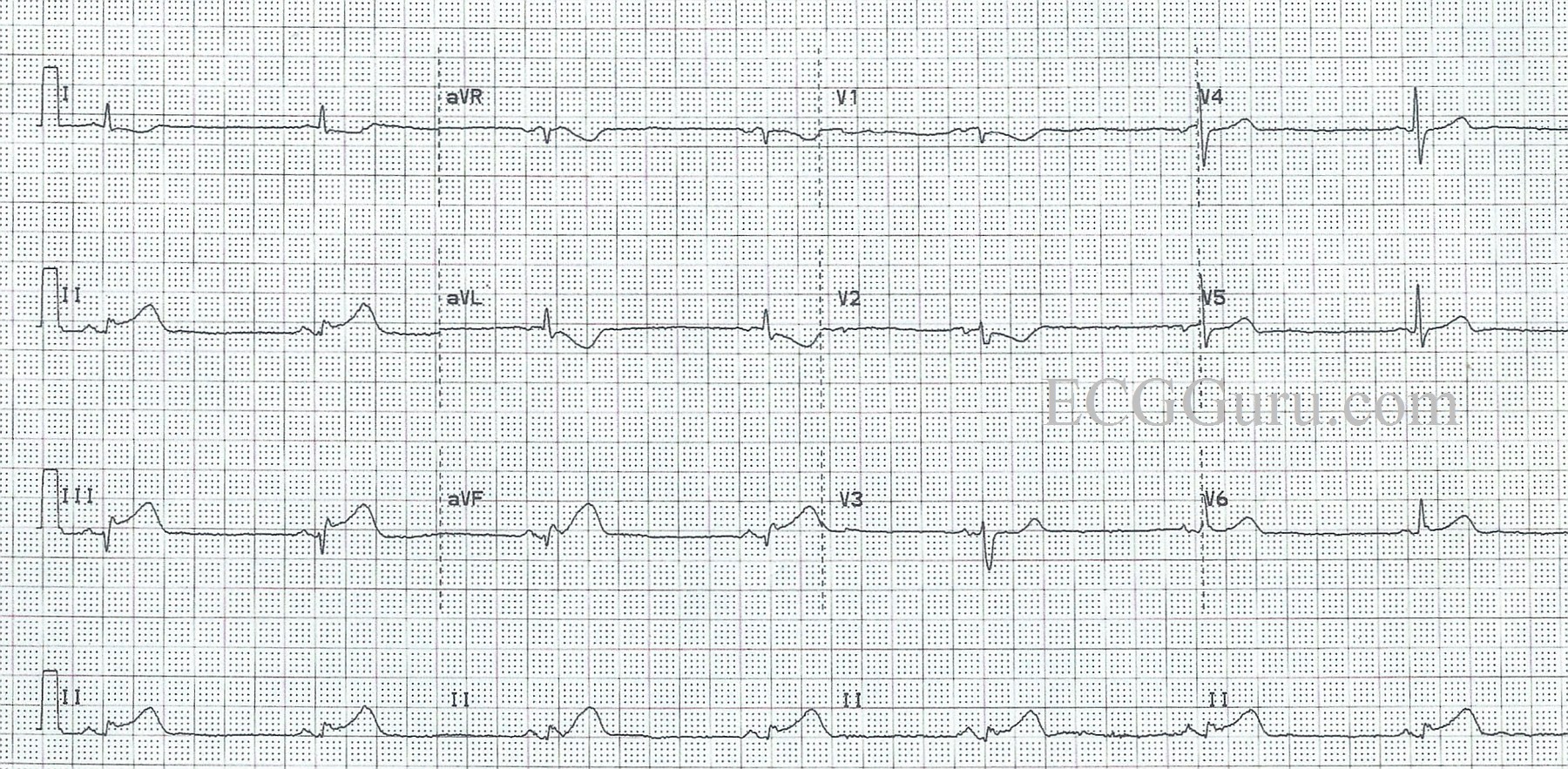
ECG BASICS: Sinus Bradycardia With First-degree AV Block

Sun, 04/21/2013 - 11:40 -- Dawn

TODAY, we are starting a new feature on the ECG GURU.  ECG BASICS will provide rhythm strips and 12-leads for your beginner or refresher students.  It can be discouraging to the entry-level student to see only intermediate or advanced material and not understand it.  We must remember to start at the most elementary concepts, and then build on them, just as we do with any other subject.  Even more advanced students sometimes benefit from a return to the "basics".  In this weekly feature, you will find downloadable content that is, like all ECG Guru content, FREE for use in an educational context.  Please let us know in the "Comments" section below what ECGs, rhythm strips, or illustrations you would like to see featured in this new area.


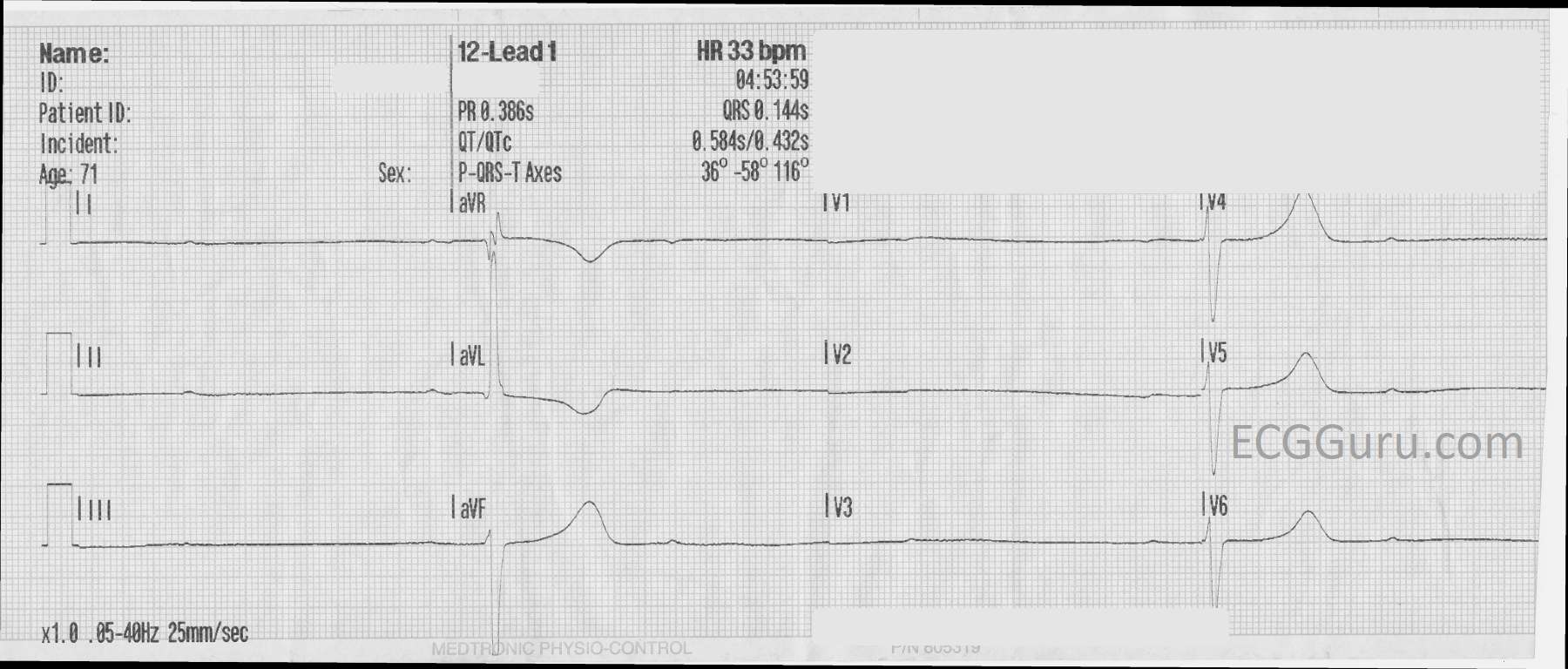
Today's strip:  Sinus bradycardia with first-degree AV block.  The rate is in the 30's and slowing, and the PR interval is .26 seconds.

jer5150's picture

Jason's Blog: ECG Challenge of the Week for March 31st - April 7th.

Patient's clinical data:  66-year-old white man.

Amongst the computer's several statements was the interpretation of "Undetermined rhythm".  To the computer's statement, the reviewing cardiologist added the freehand text of "Abnormally slow" but failed to provide a diagnosis.   

What is accounting for this pattern?

jer5150's picture

Jason's Blog: ECG Challenge of the Week for March 17th - 24th.

Patient's clinical data:  Unknown aged white man.

What well-known eponym can technically be applied to this 12-lead ECG?  HINT:  It takes on a somewhat unusual form here.

Sinus Bradycardia With First-Degree AV Block and Left Anterior Fascicular Block

Sun, 03/10/2013 - 03:13 -- Dawn

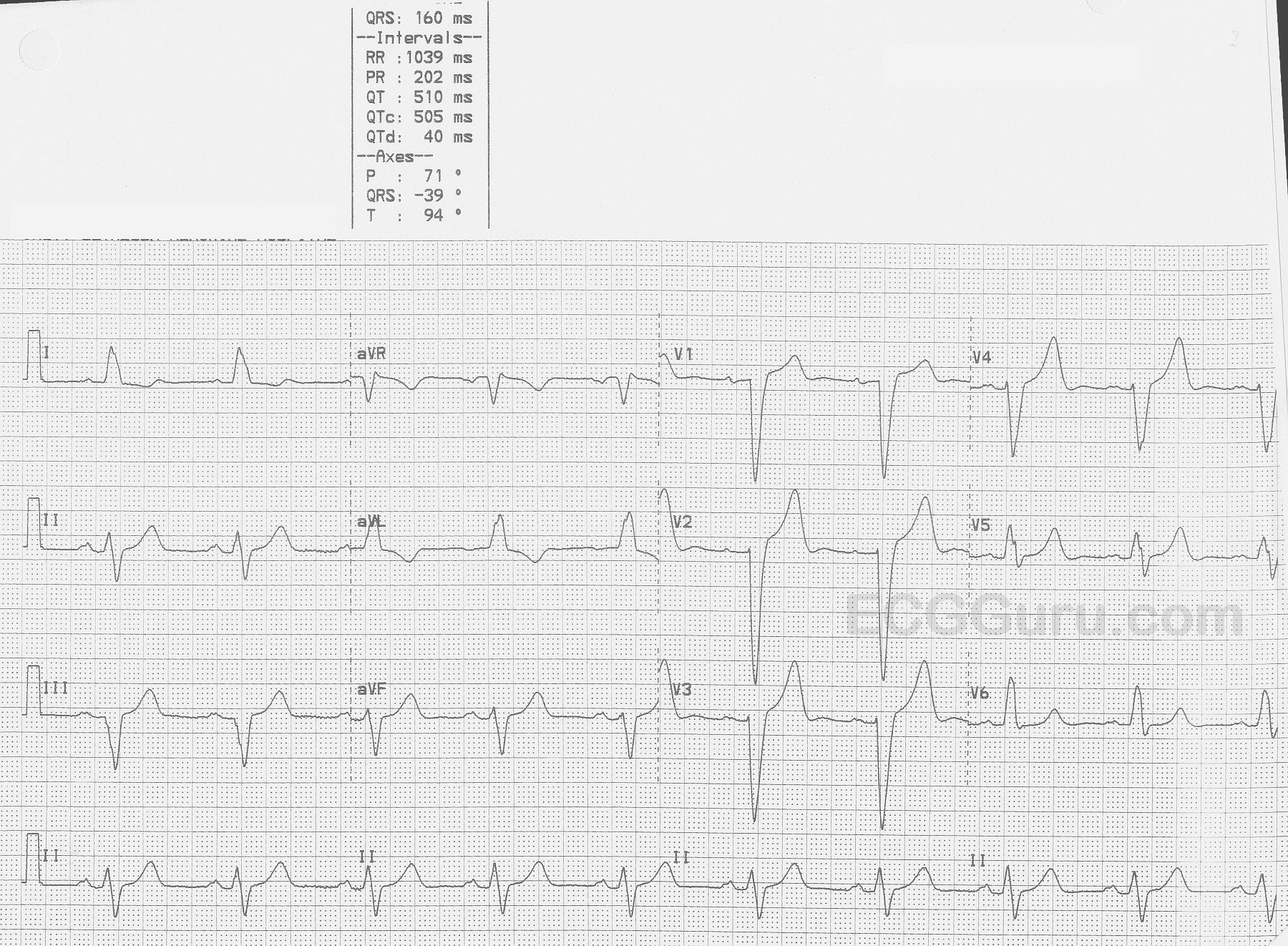
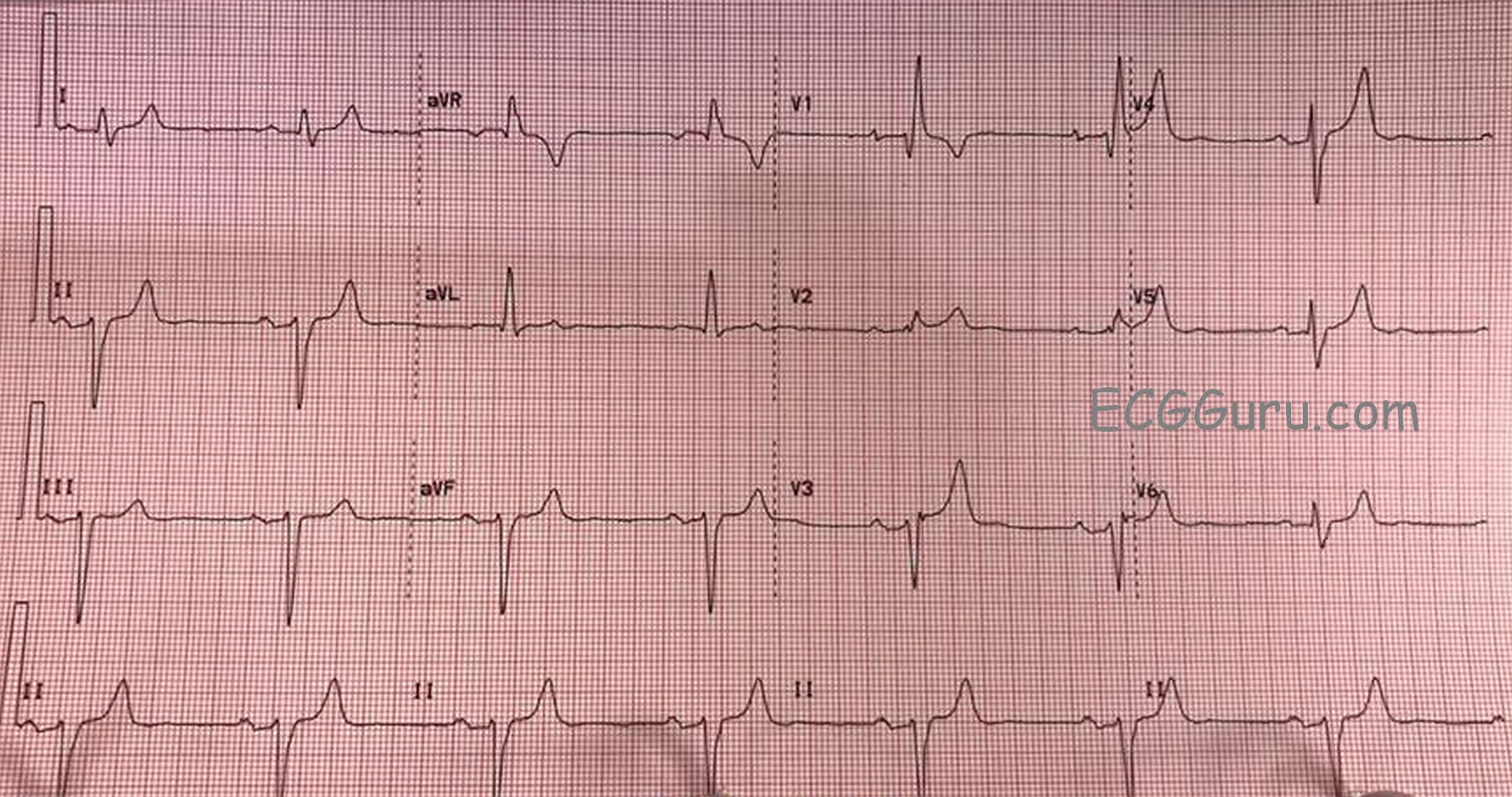
This is a good ECG for demonstrating sinus brady and first-degree AV block. It shows the sinus node in the process of slowing down. For your more advanced students, there is left axis deviation due to left anterior fascicular block (left anterior hemiblock). The ST segments are flat, suggesting coronary artery disease. The fourth (bottom) channel is a good rhythm strip. Just crop the image. Please refer to Dr. Grauer's interesting post on teaching hemiblocks on our Ask The Expert page.

jer5150's picture

Jason's Blog: ECG Challenge of the Week for Jan. 20th - 27th.

Patient's clinical data:  This 12-lead ECG is from an adult patient of unknown age and gender (at the time of posting).  Active medications included Atenolol.  Patient's only complaints and symptoms were cramps and palpitations in the form of "an occasional extra beat".  This ECG was the patient's initial "baseline".  Based on what the patient's primary care provider (PCP) misinterpreted in this ECG, the patient ended up having an erroneous diagnosis listed among their "active proble

jer5150's picture

Jason's Blog: ECG Challenge of the Week for Jan. 6th - 13th.

This ECG was taken from an 87-year-old black man and was diagnosed by the reviewing cardiologist as "complete A-V block".

Is that really the interpretation or is it something else?

jer5150's picture

Jason's Blog: ECG Challenge of the Week for Dec. 23rd - 30th.

I performed this ECG earlier this year in an outpatient clinic.

Patient's clinical data:  85-year-old white man; asymptomatic. 

Questions?
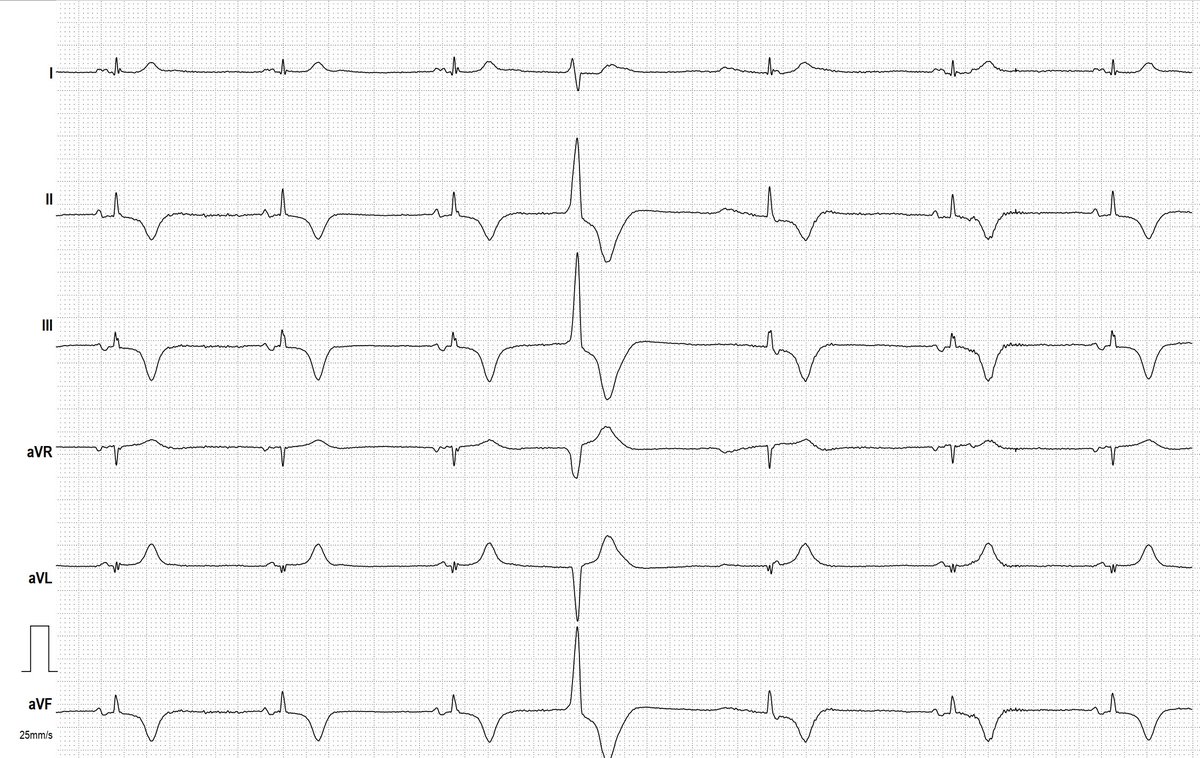
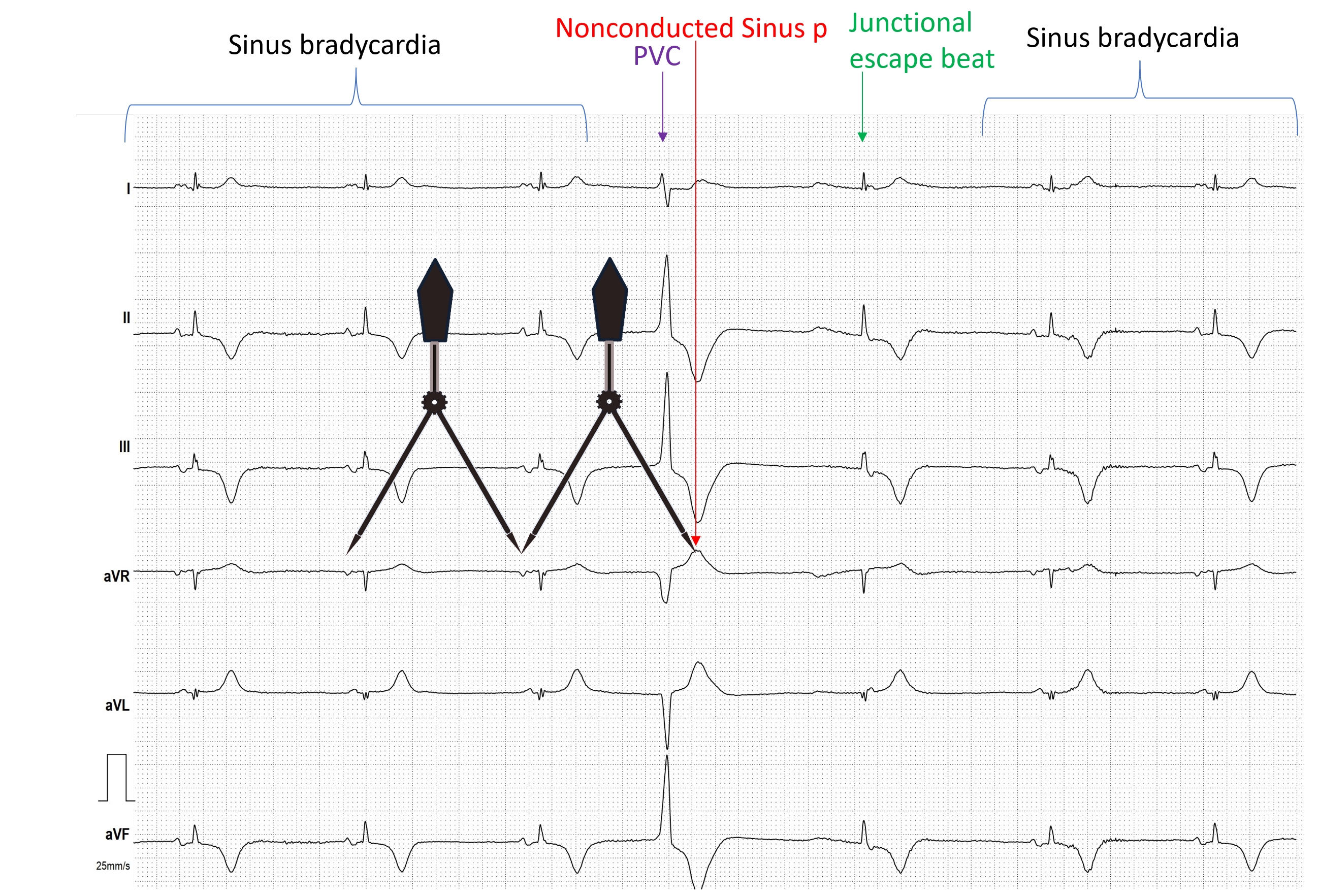
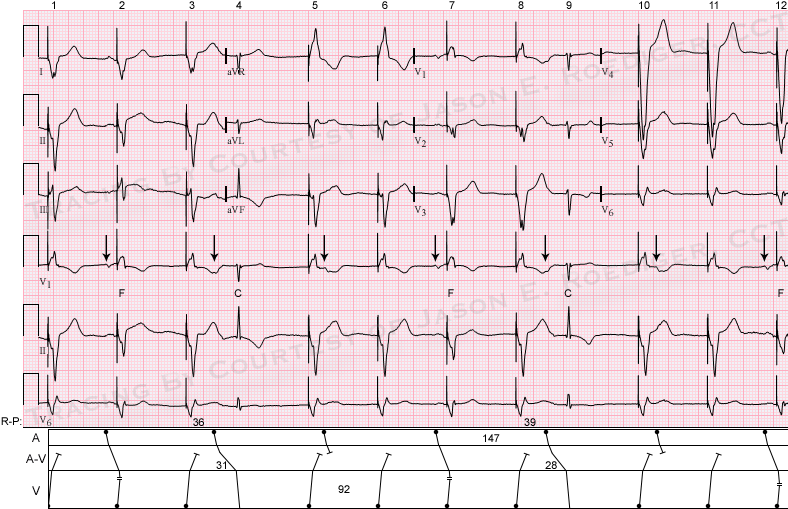
(1.)  What rhythm is this tracing showing?
(2.)  What clue/sign is used to differentiate between the two anomalous beats (i.e., 4th and 6th beats).  HINT:  It's named after a part of a certain animal's anatomy.

jer5150's picture

Jason's Blog: ECG Challenge of the Week for Oct. 28th - Nov. 4th.

This is one of five consecutive serial ECGs that I performed several years ago on a patient in our Outpatient ECG Lab.  The patient was asymptomatic and the ECG was ordered as "Routine" by the patient's Primary Care Provider (PCP).  I deliberately "froze" the tracing on the screen and captured this image because I wanted to show a transition on the ECG.

No clinical patient data available.

What does this tracing show?  Choose the correct answer from the list below.

jer5150's picture

Jason's Blog: ECG Challenge of the Week for Sept. 16-23. What probable clinical disorder is this tracing suggestive of?

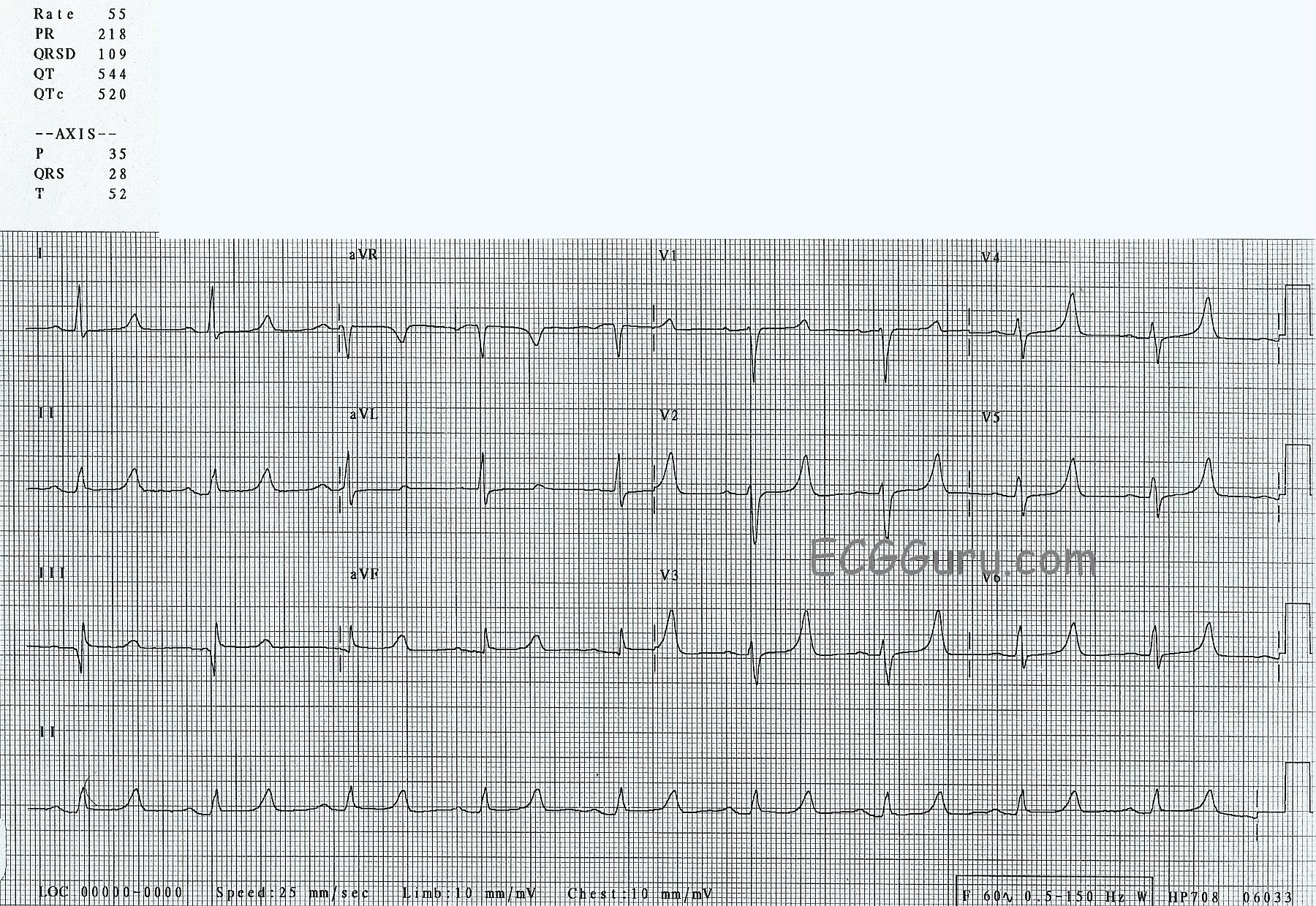
Unfortunately this 12-lead ECG is over 20-years-old, so I have very limited information to go on but this is what I do know about it.

Subscribe to RSS - Sinus bradycardia