ECG Guru - Instructor Resources

A gathering place for instructors of ECG and cardiac topics.


Subscribe to me on YouTube

Hemiblock

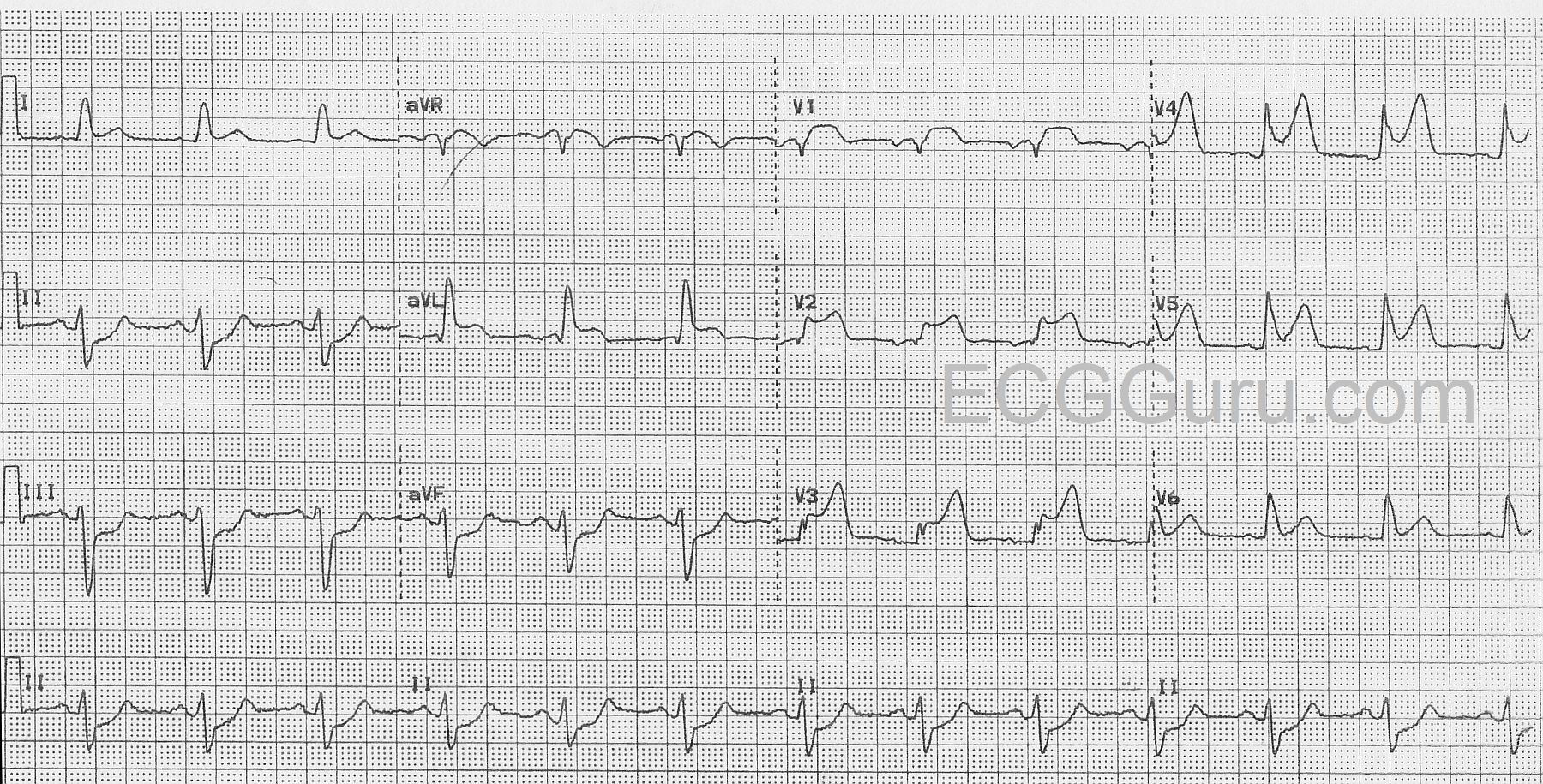
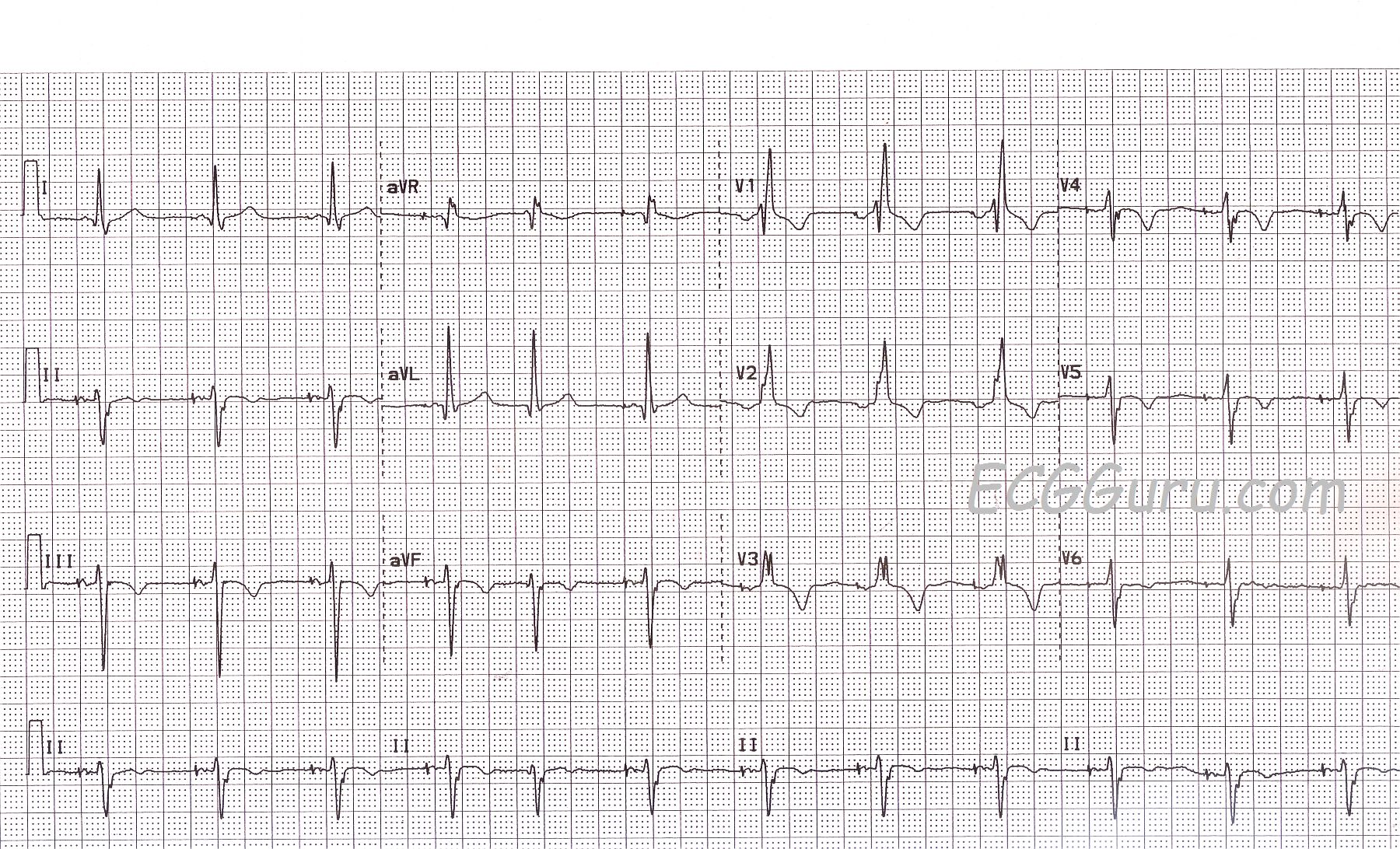
Instructors' Collection, ECG of the WEEK, May 13, 2013: Right Bundle Branch Block With Left Posterior Fascicular Block

Mon, 05/13/2013 - 10:09 -- Dawn

This is a good clear example of right bundle branch block with left posterior fascicular block.  The RBBB is diagnosed by the following criteria:  wide QRS (.12 sec), supraventricular rhythm (NSR), an rsR' pattern in V1, and wide little s waves in I and V6.  The LPFB is inferred by the right axis deviation (Lead III QRS is a bit taller than Lead II and Leads I and aVL are negative), and the fact that there is no other obvious cause for right axis shift noted in this patient.  This constitutes a BIFASCICULAR BLOCK.  The ventricles are being depolarized by way of the anterior fascicle.  In addition, there are slight ST elevations in many leads, with an upward coving in the anterior-septal leads (V1, V2, V3).  Depending upon the patient's history and presentation, this could represent a recent M.I. or pending issues. The borderline first-degree AV block may be of concern in this patient, since first-degree AVB is associated with progression of bifascicular block to complete heart block.  Reference:  Ann Card Anaest, 2010 Jan-Apr;13(1):7-15. doi: 10.4103/0971-9784.58828


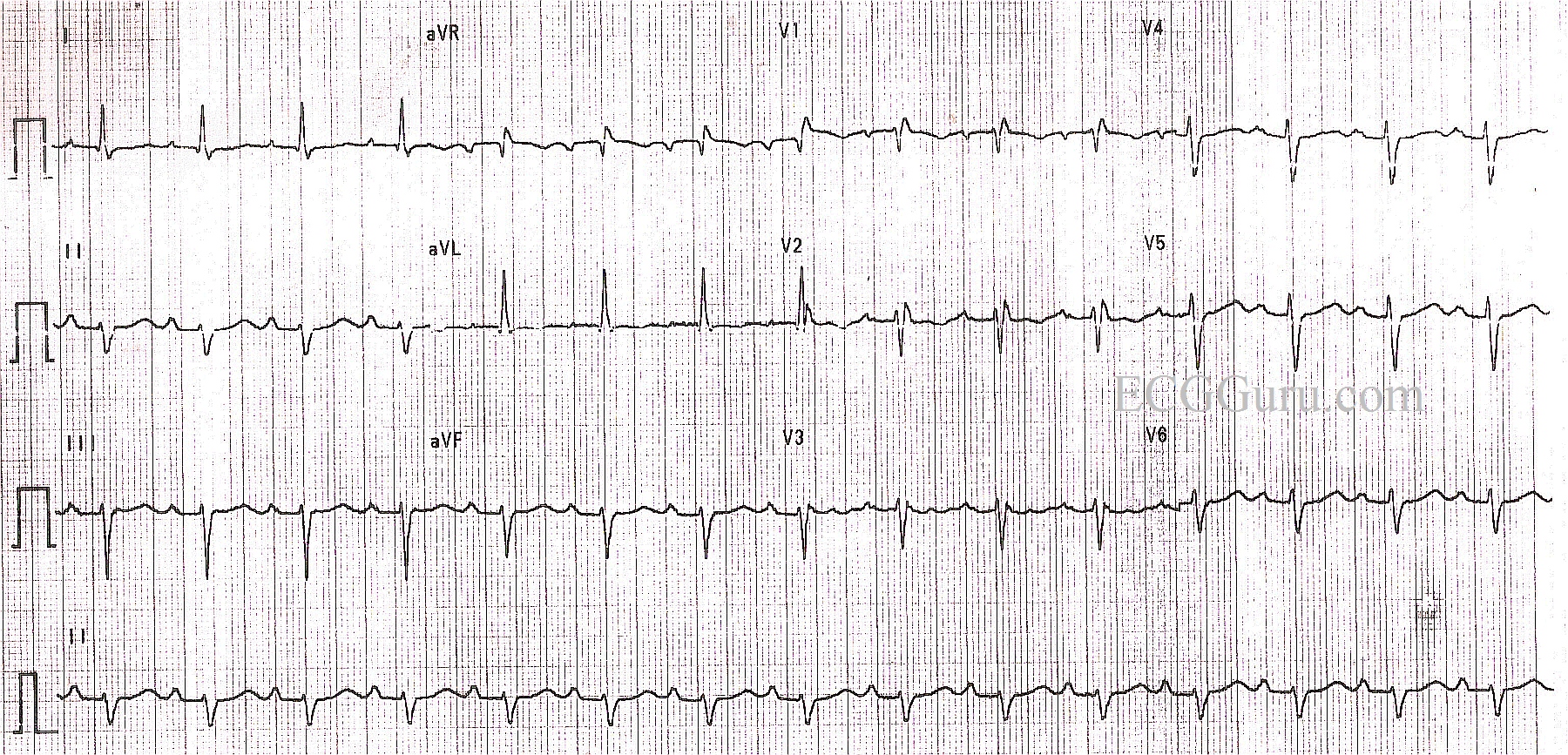
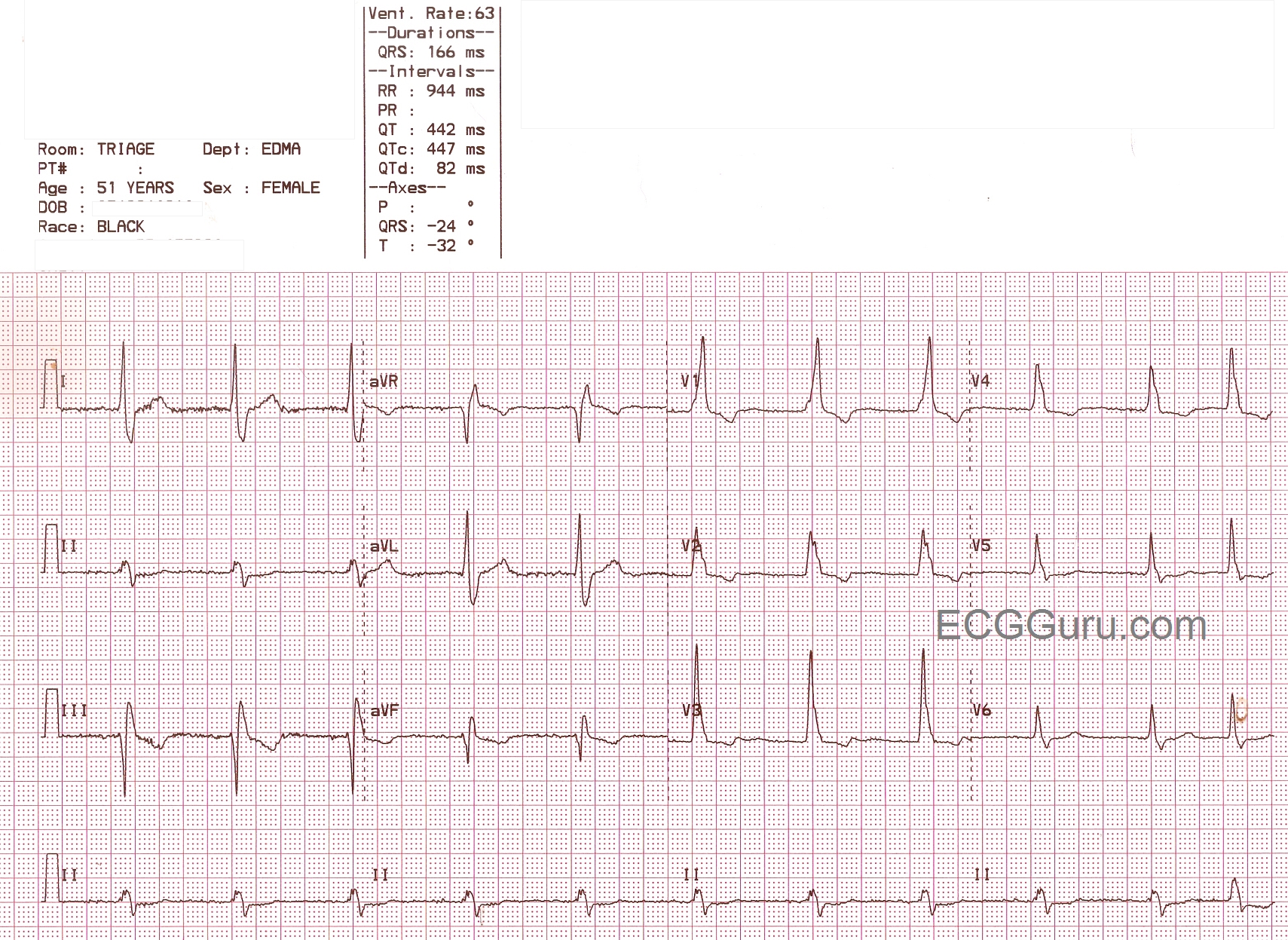
Instructors' Collection ECG OF THE WEEK, March 27, 2013 __ Right Bundle Branch Block With Atypical QRS in V1 and LAFB or Ventricular Rhythm???

Wed, 03/27/2013 - 21:28 -- Dawn

This is quite an interesting ECG, and the ECG Guru would love to hear what you think about it.  What we do know is that it is a wide-complex bradycardia in a patient for whom we have no clinical data, except that she is a 51 year old female.  The rhythm is probably junctional, as no P waves are seen and the rhythm is regular.  The rate of 63 per minute would be consistent with that. Interestingly, no disassociated sinus P waves are seen.  All slow wide-complex rhythms should be evaluated for idioventricular origin, or AIVR.  The QRS in V1 shows an atypical right bundle branch block pattern.  We usually look for rSR', or "bunny ears",  but  this ECG shows an upright R wave with a smaller, slurred r wave before it.  What makes this look like RBBB is the prominent wide little S wave in V6 and in Lead I.  We question the R wave progression, too.  Do you think it is possible that the electrodes for V2 and V3 are switched?  The axis is leftward, causing Lead II to be nearly biphasic - it represents a synthesis of what is seen in Leads I and III.  This is enough left axis shift to diagnose a left anterior fascicular block (with RBBB = bifascicular block). 

This is a great ECG, and we can't wait to hear from all you ECG Gurus out there. Maybe we will need to adjust our diagnosis after we hear from you.

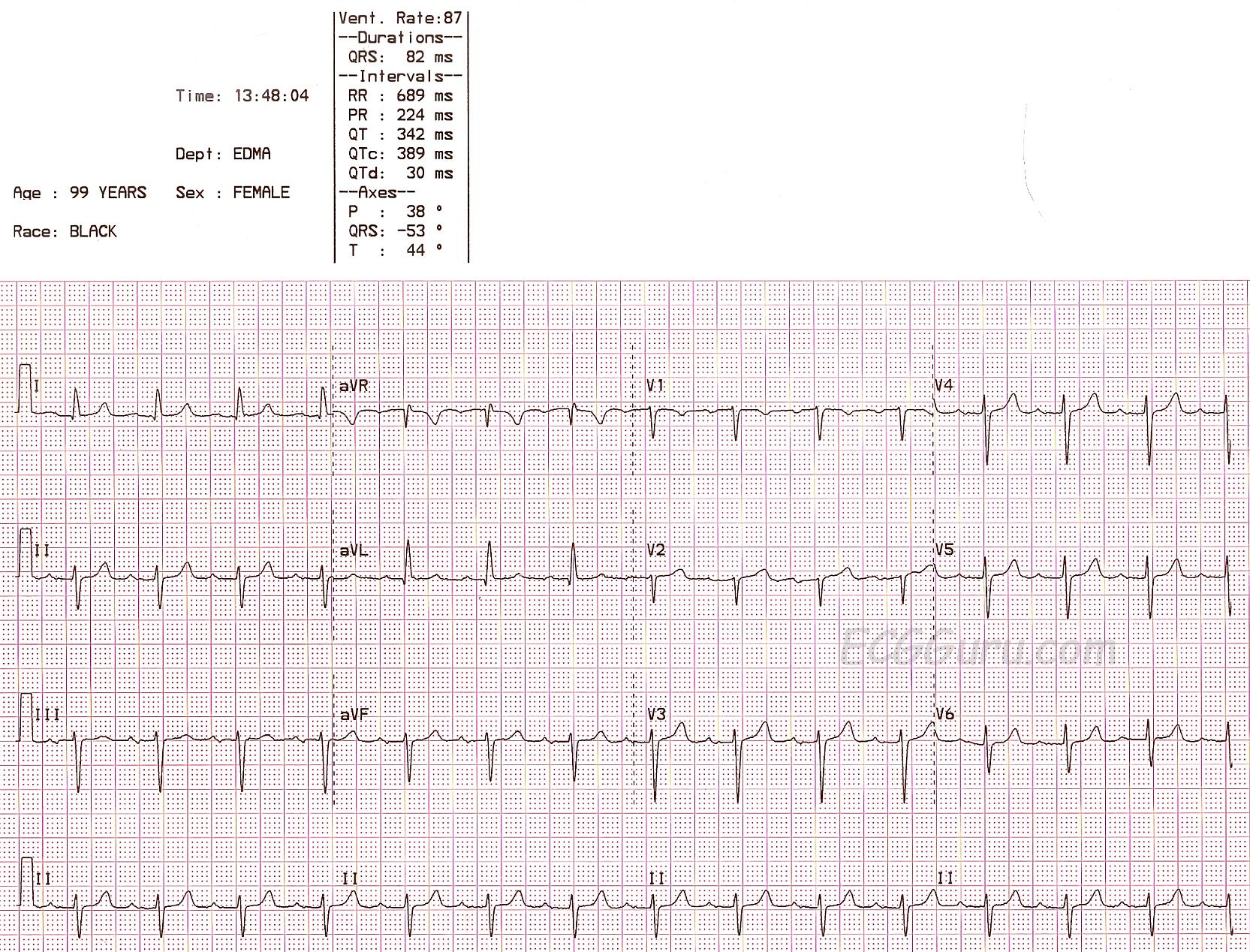
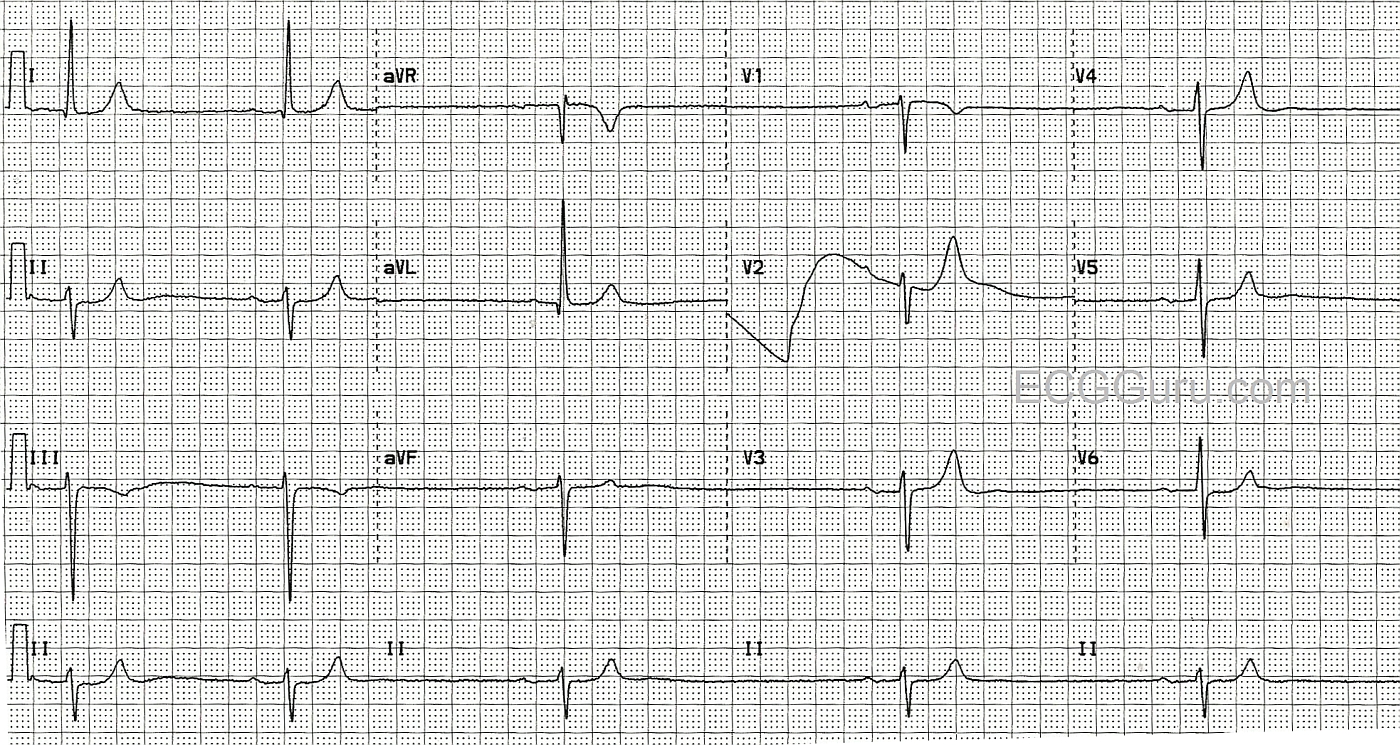
Sinus Bradycardia With First-Degree AV Block and Left Anterior Fascicular Block

Sun, 03/10/2013 - 03:13 -- Dawn

This is a good ECG for demonstrating sinus brady and first-degree AV block. It shows the sinus node in the process of slowing down. For your more advanced students, there is left axis deviation due to left anterior fascicular block (left anterior hemiblock). The ST segments are flat, suggesting coronary artery disease. The fourth (bottom) channel is a good rhythm strip. Just crop the image. Please refer to Dr. Grauer's interesting post on teaching hemiblocks on our Ask The Expert page.

Sinus Tach vs SVT In An Inebriated Patient

Sat, 12/29/2012 - 16:21 -- Dawn

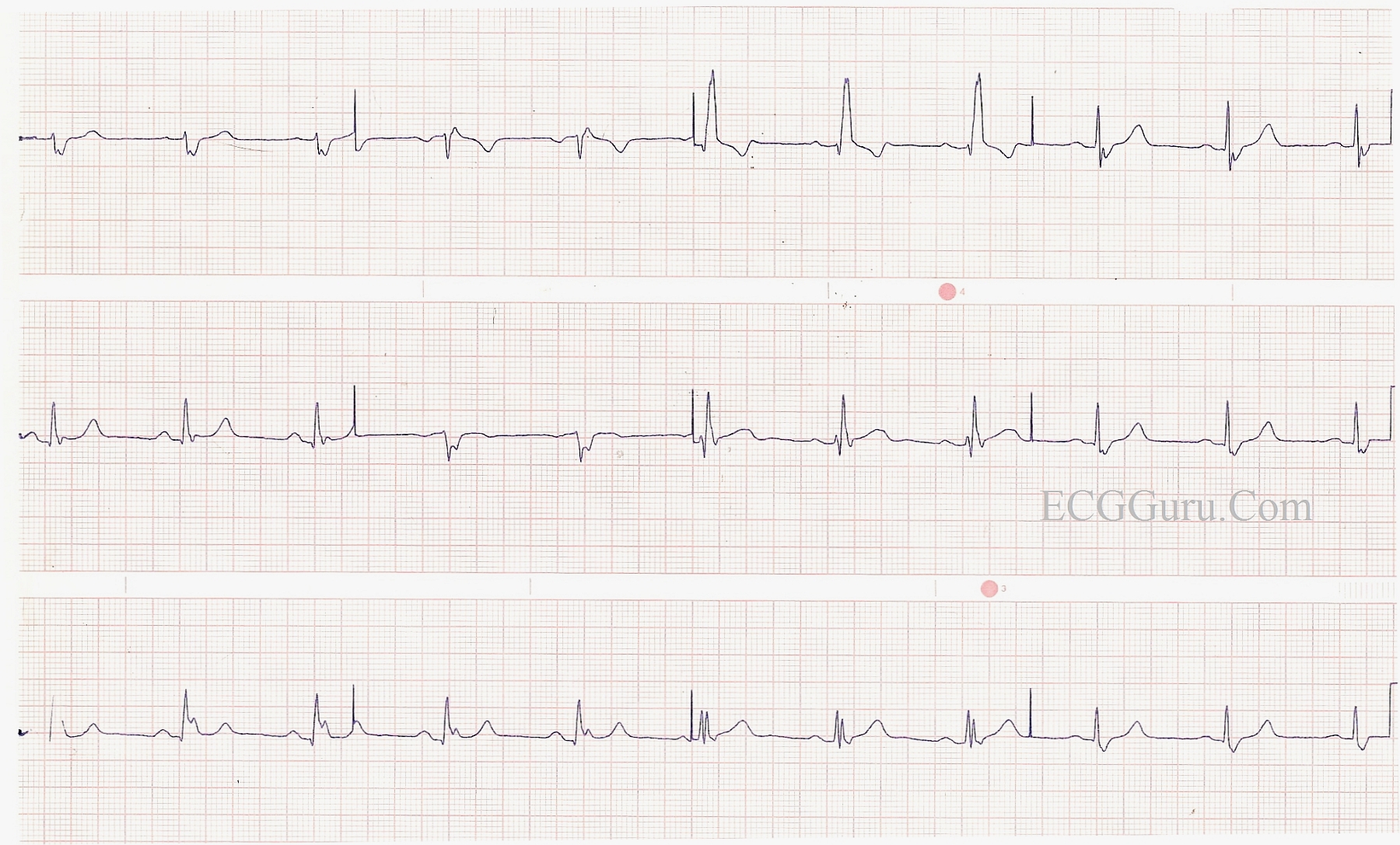
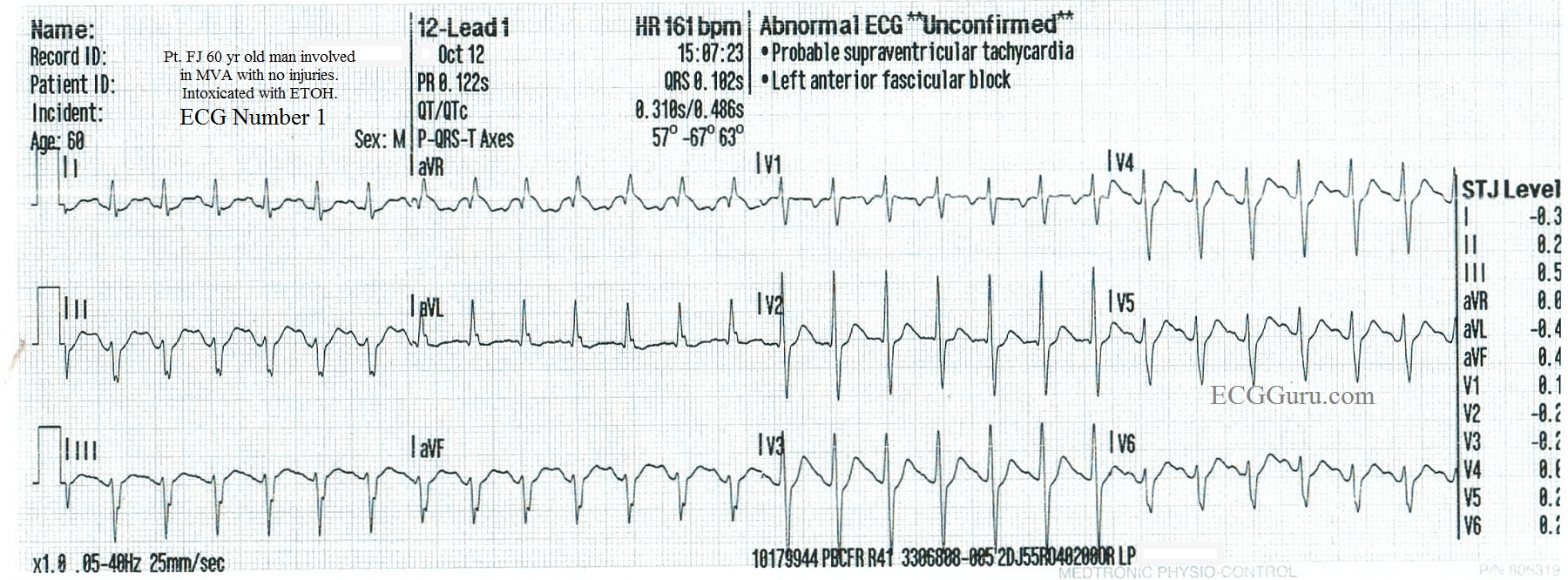
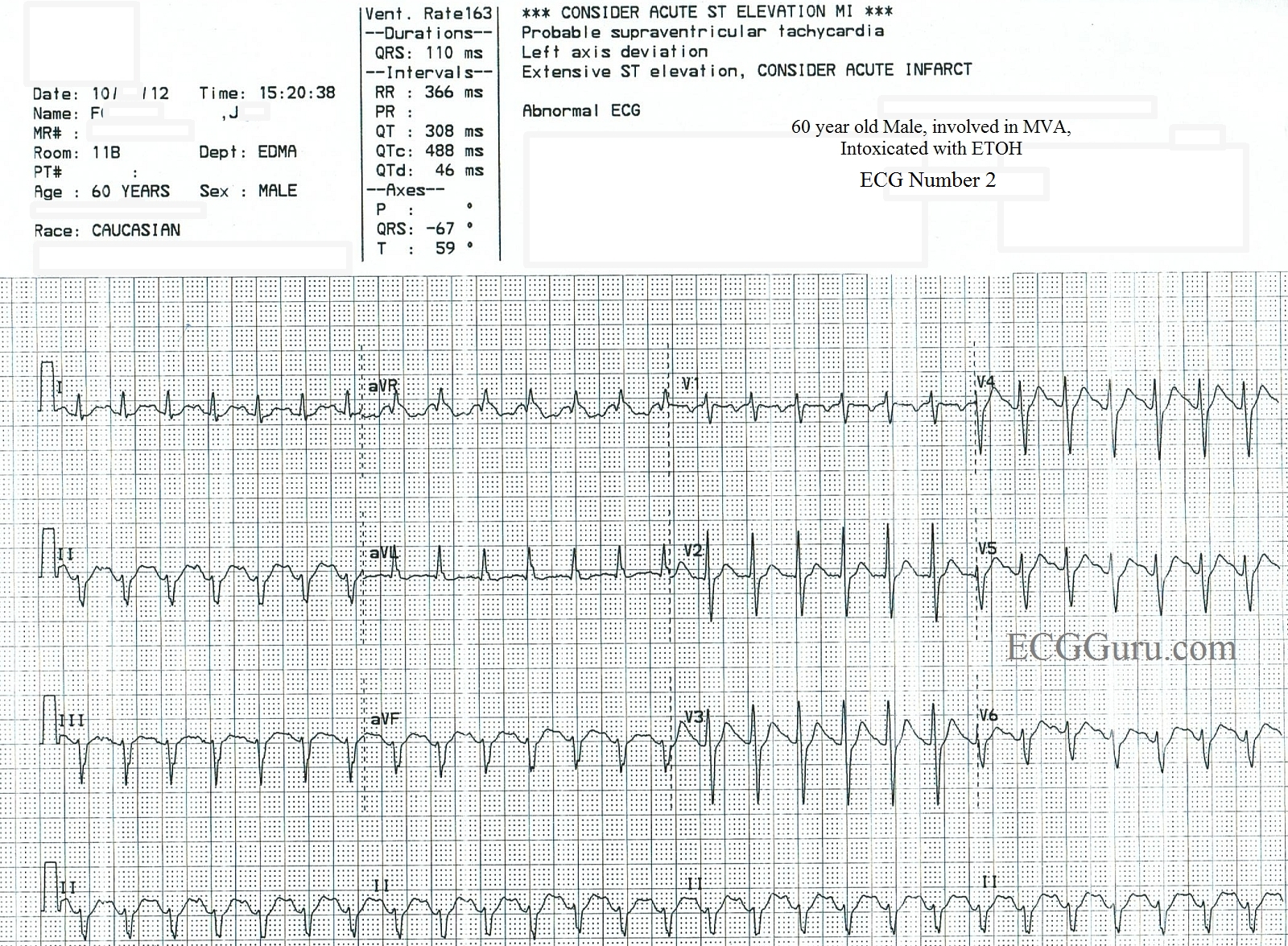
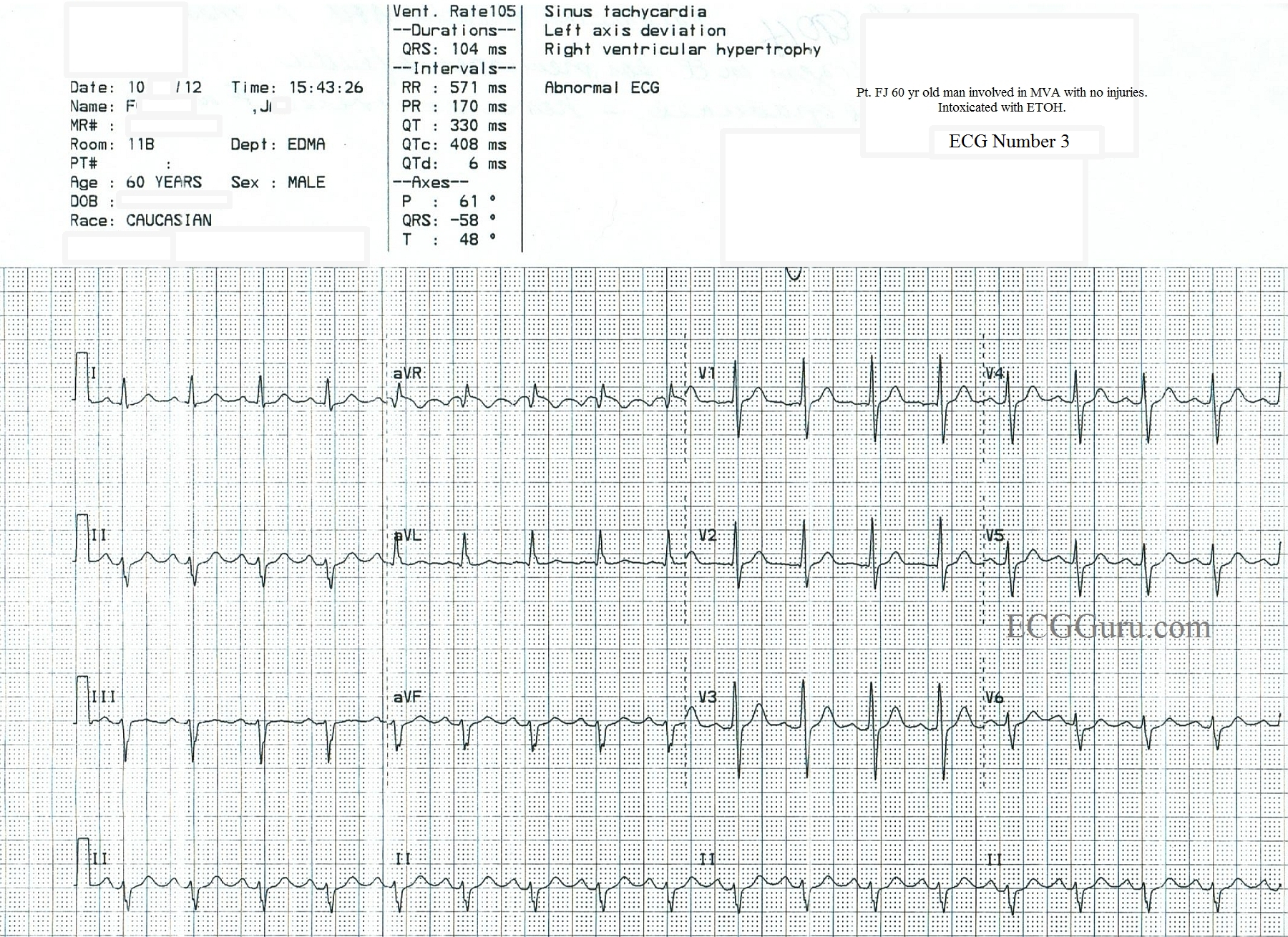
This series of ECGs was obtained from a 60-year-old man who was involved in a one-car accident.  He sustained no injuries, but his blood alcohol level was far above the legal limit for intoxication at over 300 mmol/L.  ECG No. 1 shows the ECG obtained by paramedics in the field, which they incorrectly interpreted to be atrial fibrillation.  No medication was given.  The ER physician obtained ECG No. 2, and considered sinus tachycardia as the diagnosis, but also, because of the fast rate and the fact that the rate had not changed for at least 15 minutes, he considered SVT or atrial flutter with 2:1 conduction.  The ERP administered diltiazem (Cardizem) to the patient, which resulted in ECG No. 3.  The transition to the slower rate was not captured on rhythm strips, but the nurse's notes showed a gradual change over 15 minutes from a rate of 160 to 105/min.  

Usually, on the Instructors' Collection ECGs, we like to give the "answer".  In this case, however, there will undoubtedly be some discussion regarding what went on.  This discussion can be useful if you are teaching intermediate to advanced students.  Questions to consider:  1) Is the fast rhythm an SVT and, if so, which one?  2) Is it sinus tachycardia and, if so, what are the effects of the car accident and the alcohol?  3) Is the left anterior fascicular block relevant? (Criteria are left axis deviation, slightly widened QRS complex at 110 ms, no other obvious reason for the axis deviation). 4) Is the ST elevation in the inferior wall during the tachycardia a sign of acute M.I.?  The patient was lost to followup, so it is not known whether the ST changes were investigated.  Note the flat ST segment and inverted T waves in V1 during the tachycardia that resolve when the rate decreases. 

Please log in to register your comments on this interesting series.

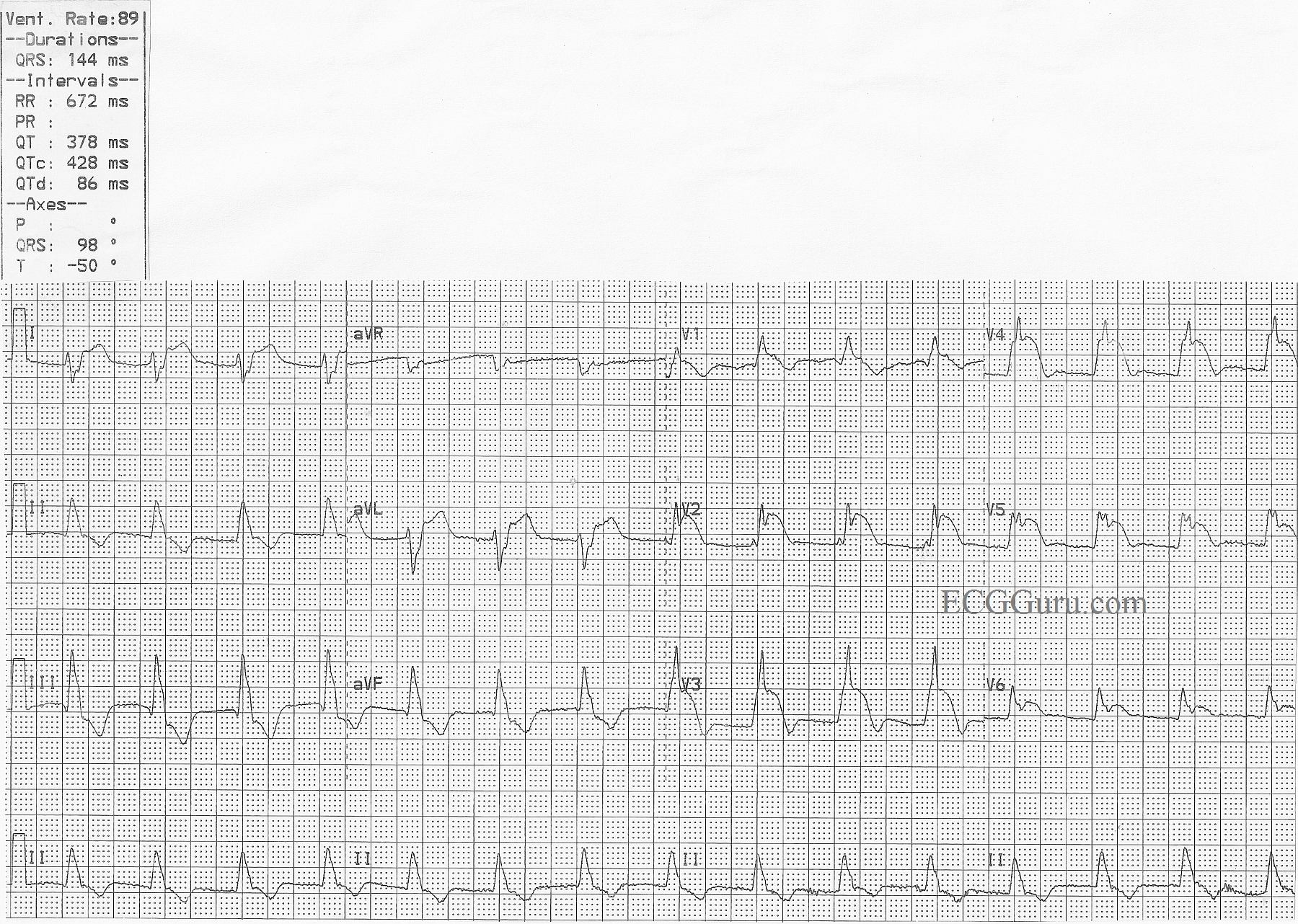
Atrial Fib, Bifascicular Block, Pacemaker

Tue, 04/10/2012 - 14:53 -- Dawn

Lots of information in this ECG! The underlying rhythm is atrial fibrillation with a controlled rate. The QRS is .12 seconds in duration, with an rSR' pattern in V1 and a wide s wave in Leads I and V6, indicating right bundle branch block. In addition, the axis is leftward - Leads I and aVL are upright and Leads II, III, and aVF are negative. There is no other obvious reason for the left axis shift, and therefore, the diagnosis by exclusion is left anterior fascicular block. RBBB and LAFB often appear together, as the right bundle branch and the anterior fascicle of the left bundle share the same blood supply from the left coronary artery. ALSO, this patient has a right ventricular pacemaker, and is pacing appropriately when the atrial fib slows. Pacer spikes are not readily seen, but the width of the QRS, the axis of the wide QRS complexes (left), and the timing (after a pause) all support the paced rhythm diagnosis. V5 and V6 actually show a very tiny hint of a spike. The T wave inversions seen in the upright leads are common with RBBB, and are usually considered normal in this setting.

Subscribe to RSS - Hemiblock